|
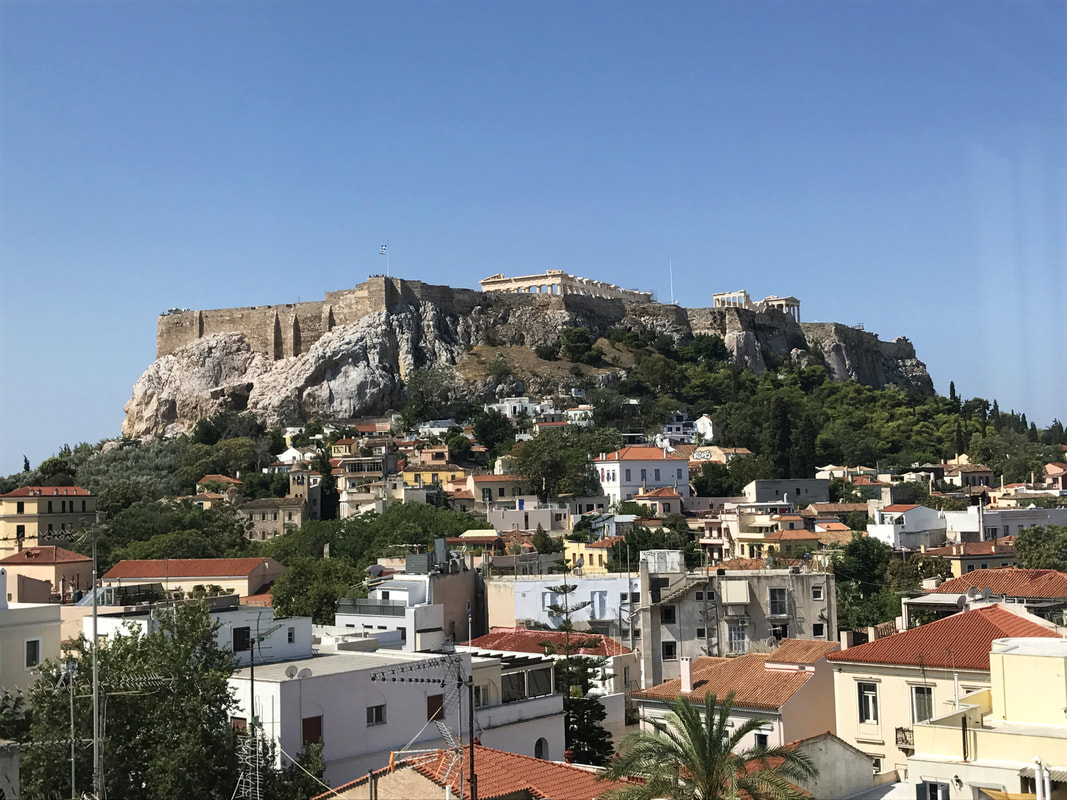
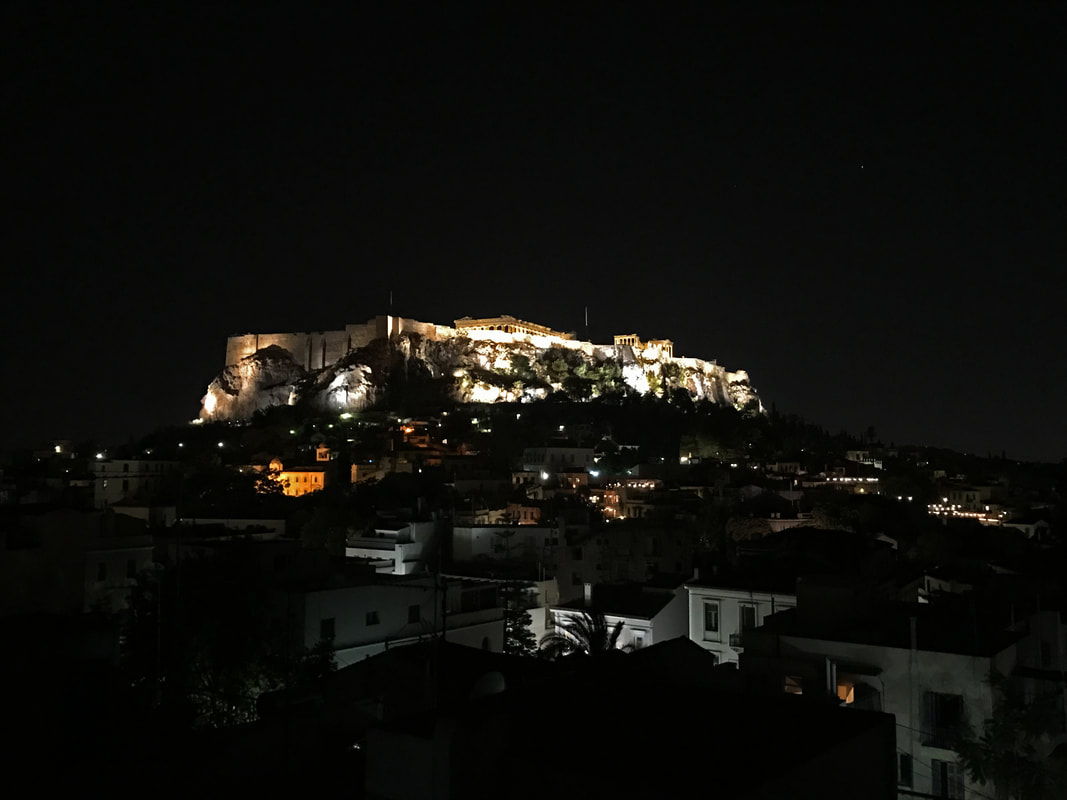
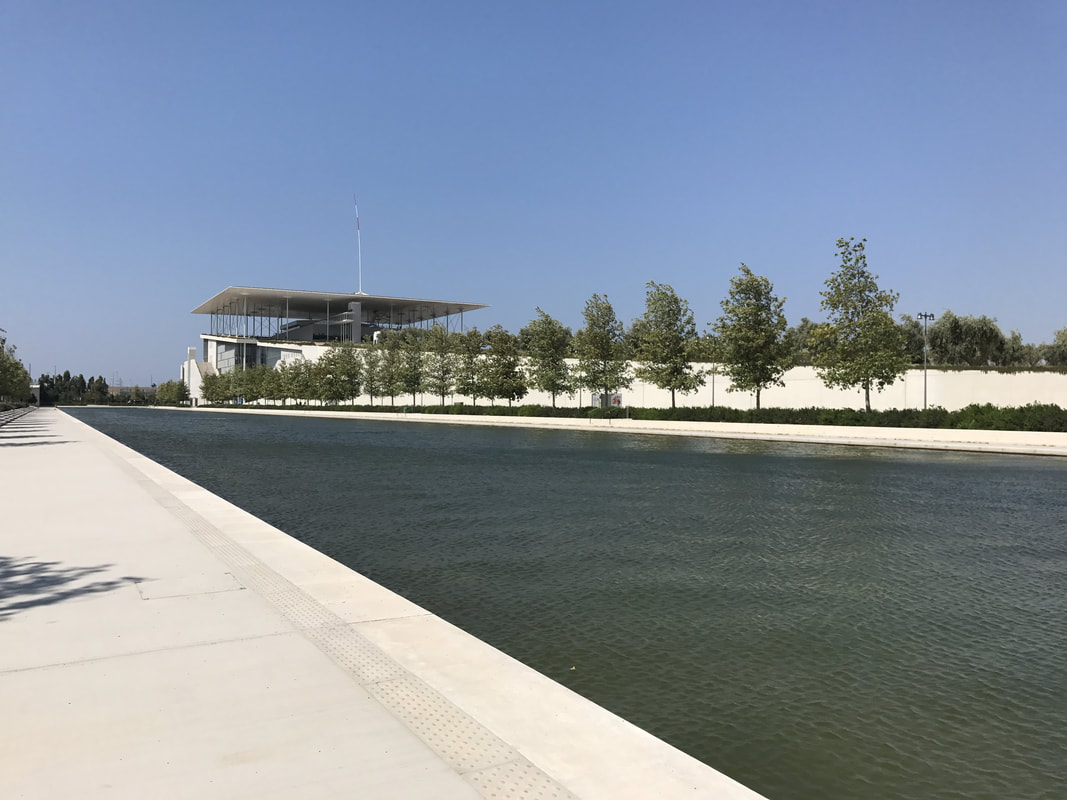
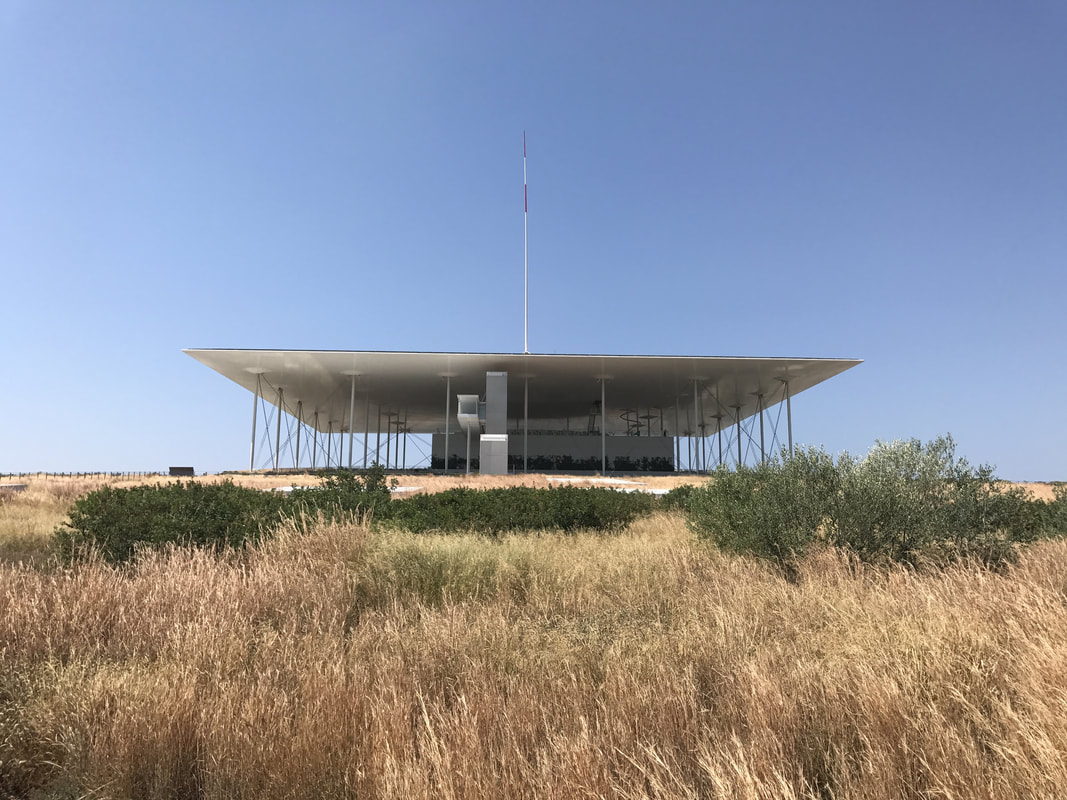
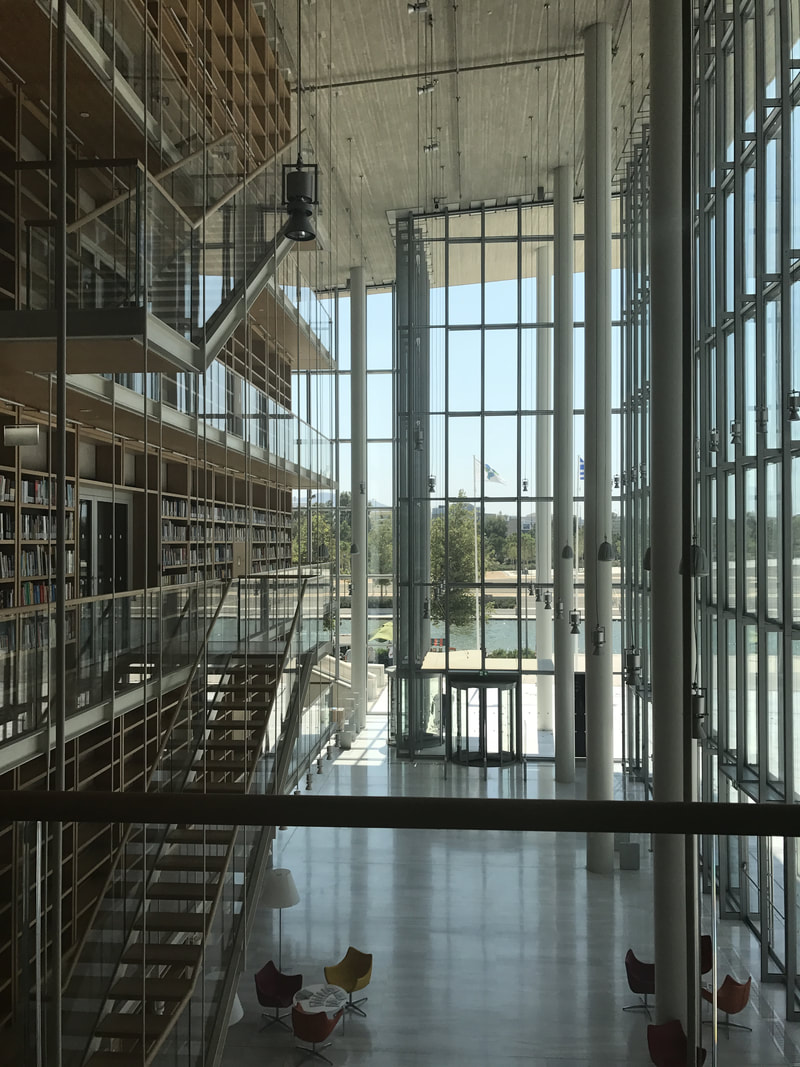
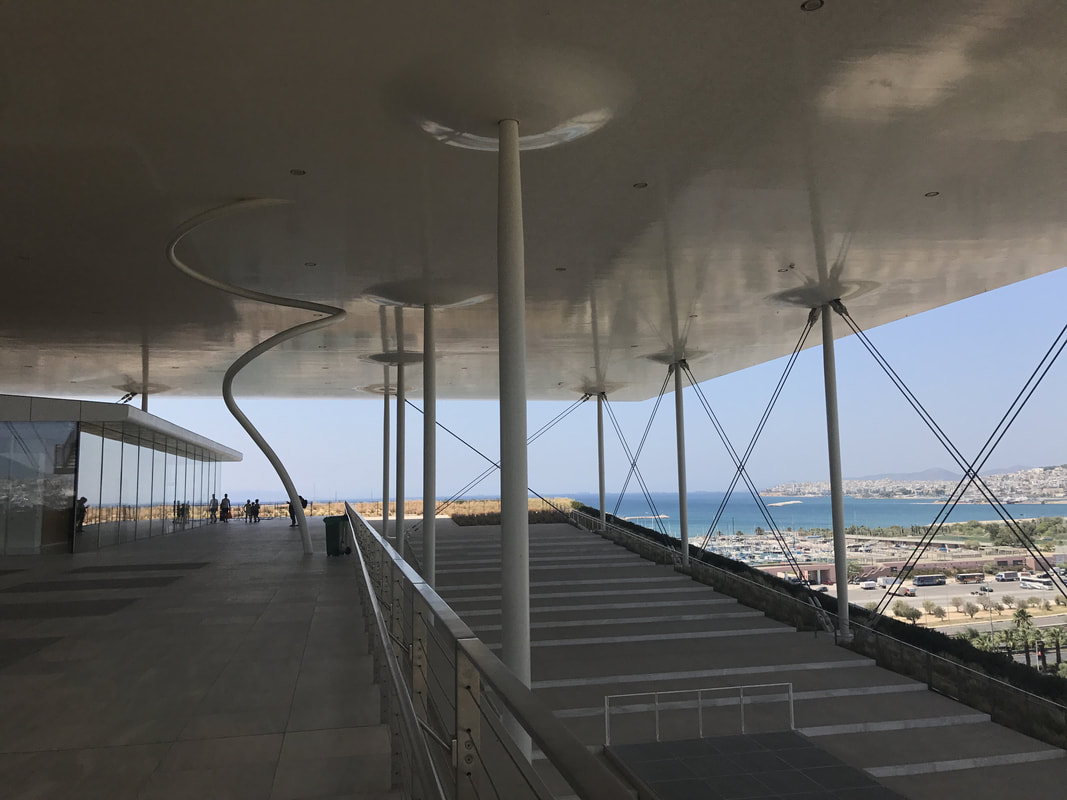
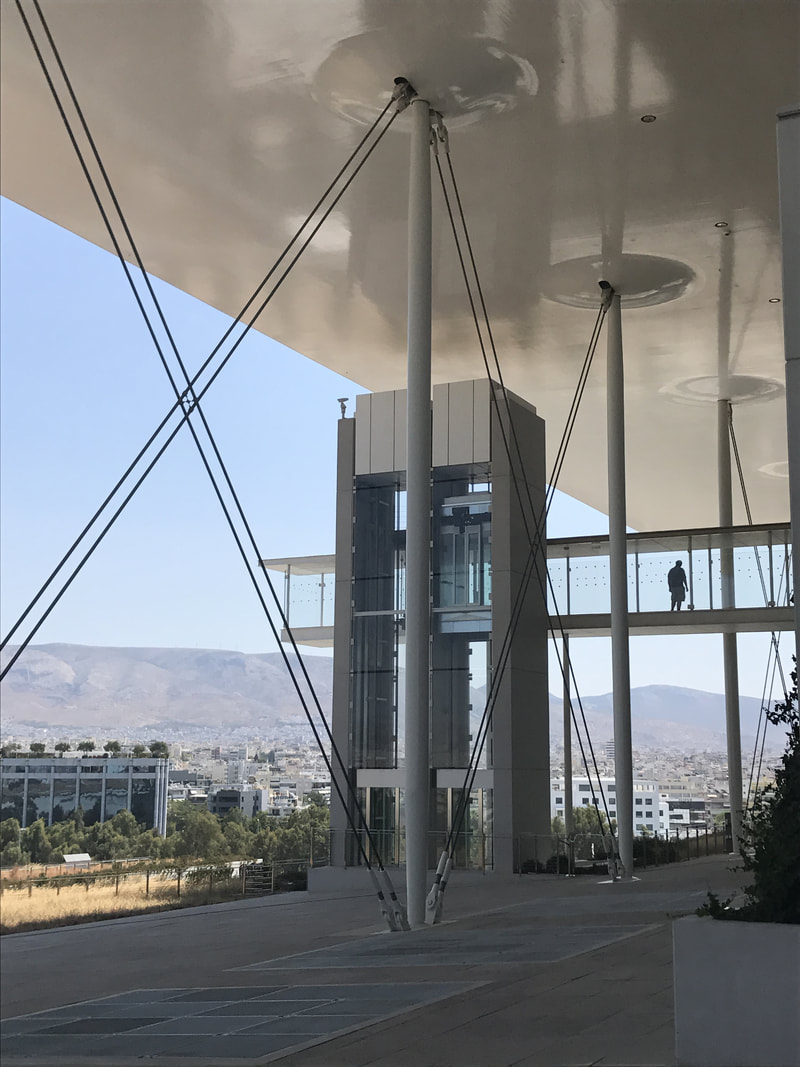
I'm glad I got to visit Athens since I missed it during my Barcelona year. Athens is one of the oldest cities of Western world with 3400 years of recorded history. The city was the center of art, architecture, politics (birthplace of democracy), and philosophy (Plato, Aristotle, Socrates), and later on housed couple other civilizations (Roman, Ottoman). I am excited and curious about how contemporary architecture deals with such context. Acropolis Acro (high, edge)- polis (city), the high city is the most famous site in Greece. The site houses couple other monuments including the Parthenon and the Erechtheion. The site contains layers of ruins and has been modified multiple times throughout history. 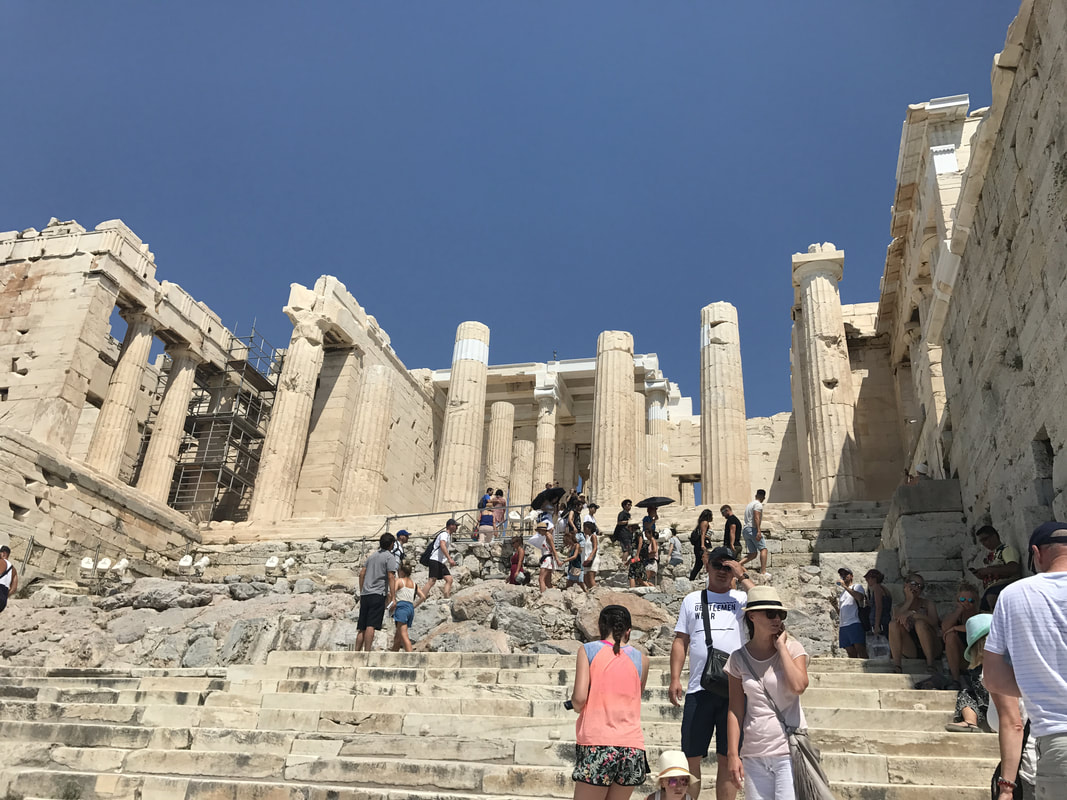 The entrance nowadays to the Acropolis is nothing compare to the original grand staircase 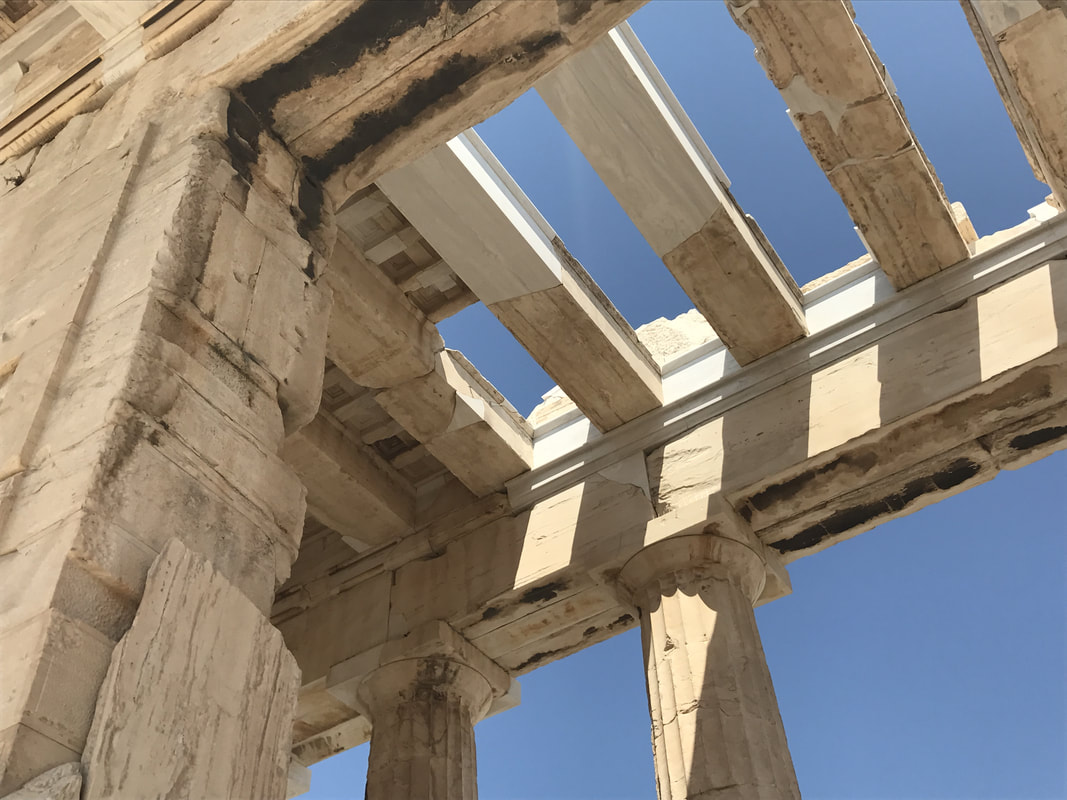 The restoration of the Acropolis: the team uses the same marble from the same quarry for the restoration. They also use the same traditional crafting method to construct the missing parts 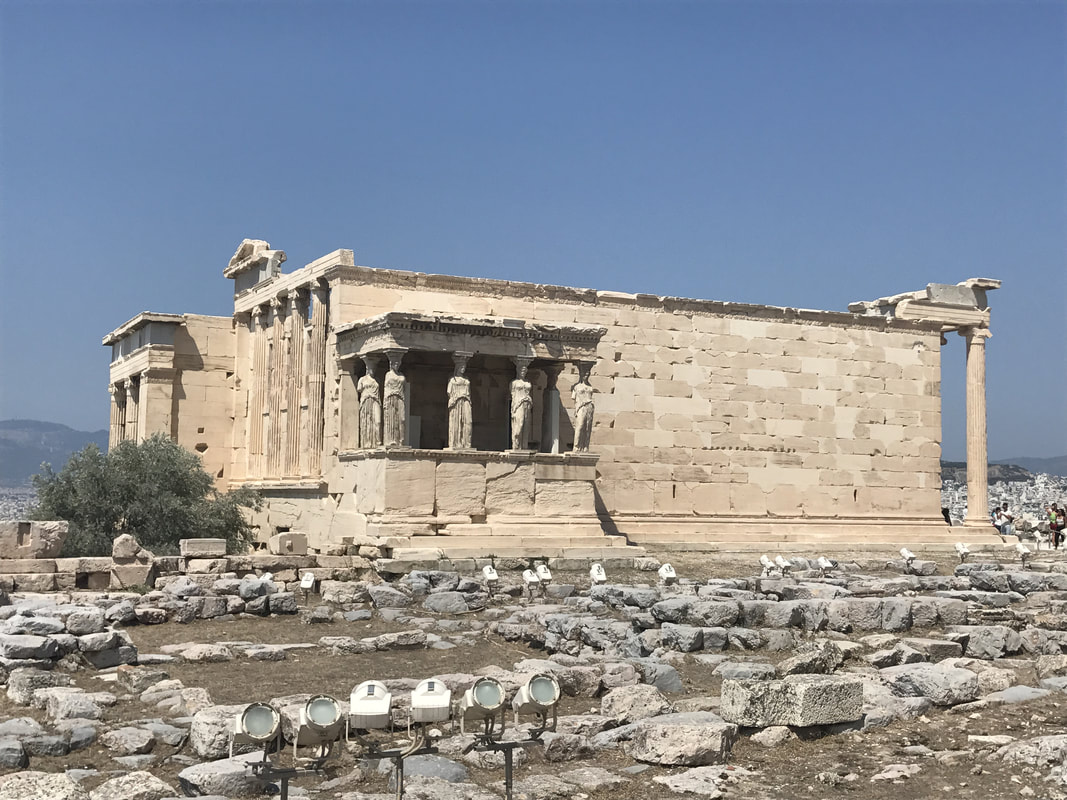 Erechtheion: Named after the Greek legendary hero Erichthonius. The temple was dedicated to both Athena and Poseidon 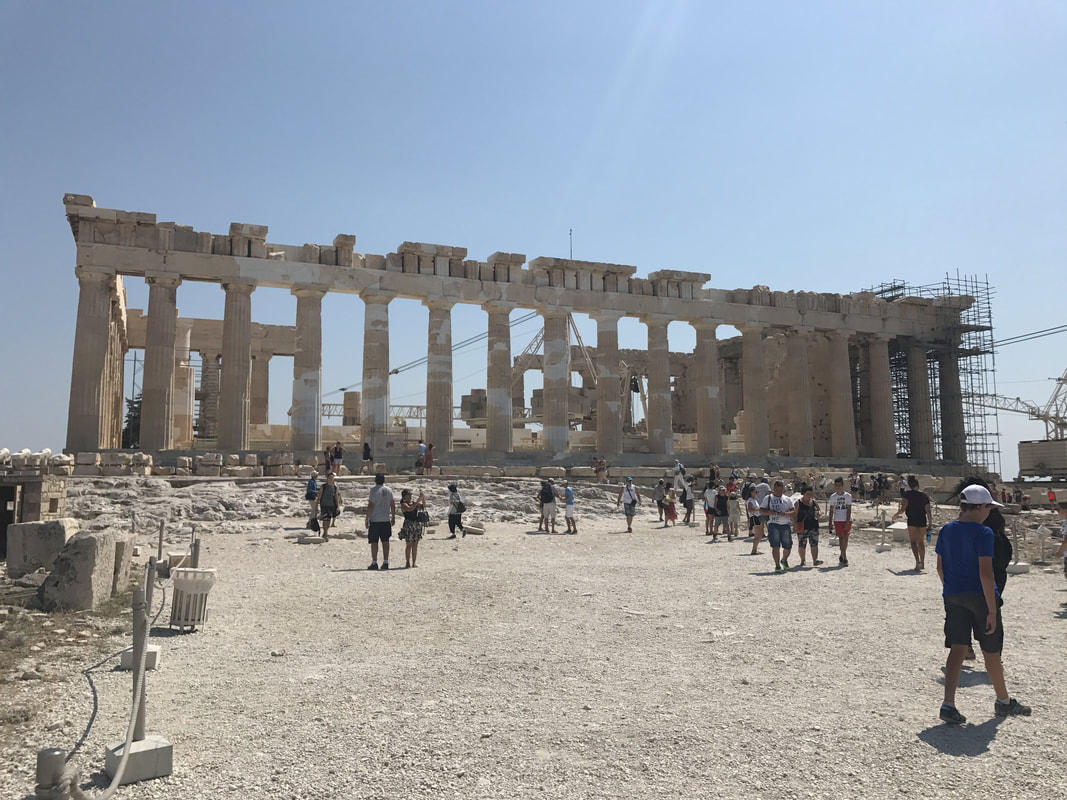 The Parthenon of the Acropolis 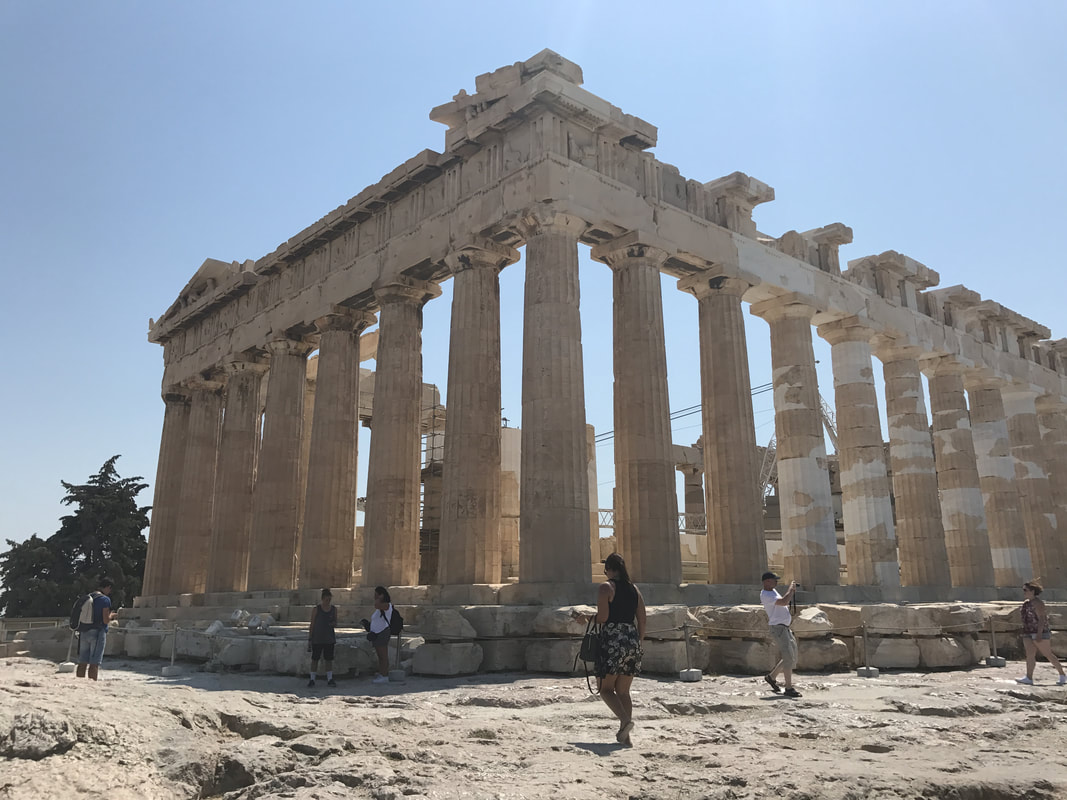 The 5-story tall Parthenon has most of its ornamentation displayed in the New Acropolis Museum and British Museum A building, a Greek temple, portrays nothing. It simply stands there in the middle of the rock-cleft valley. The building encloses the figure of the god, and in this concealment lets it stand out into the holy precinct through the open portico. By means of the temple, the god is present in the temple. The presence of the god is in itself the extension and delimitation of the precinct as a holy precinct. The temple and its precinct , however, do not fade away into the indefinite..." -Martin Heidegger The New Acropolis Museum The museum completed in 2009 designed by Bernard Tschumi displays numerous sculptures and findings from the Acropolis. The building is sitting on top of an ancient ruin and provides view to the Acropolis and the city. 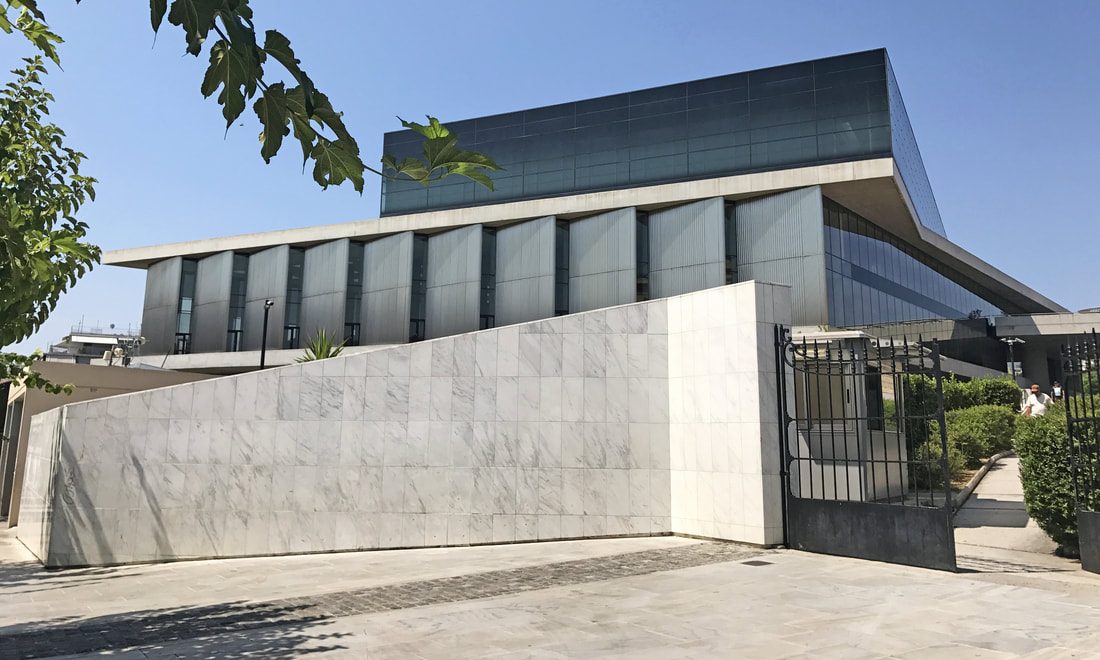 I personally think the pattern of the saw-tooth curtain wall is to mimic the rhythm of the columns of Greek temple 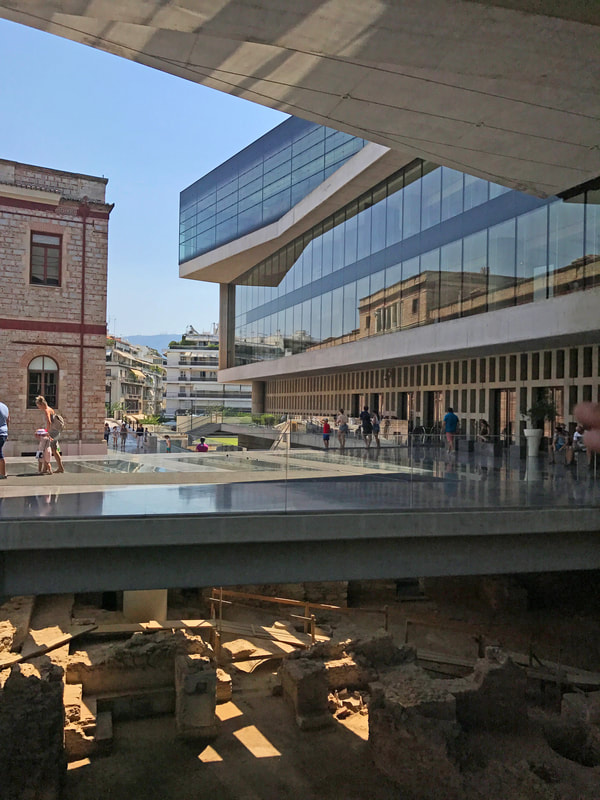 The museum contains three main levels: the bottom one for the excavation of ruins, the middle for main gallery, and the top one for the Parthenon Hall and frieze 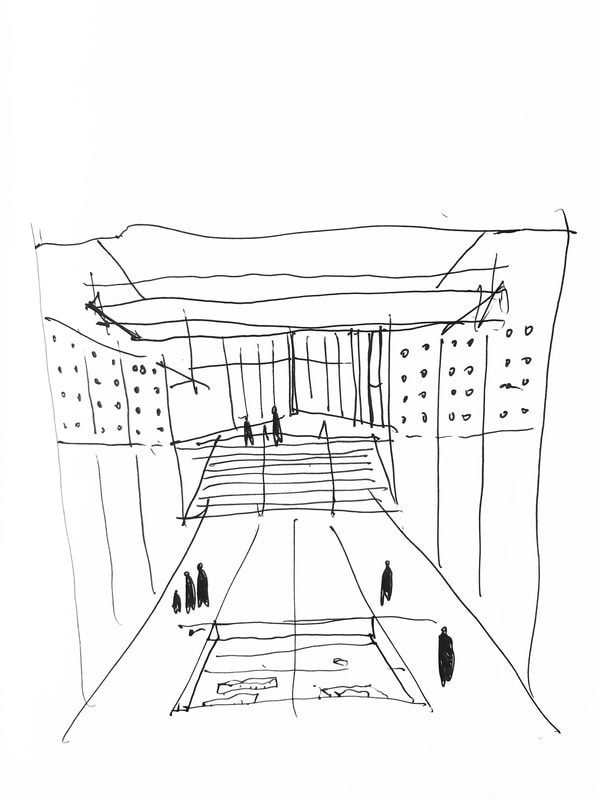 I think the slope is to physically mimic the entry of the Acropolis. The movement of ascending and lifting is to set up the experience for the gallery space 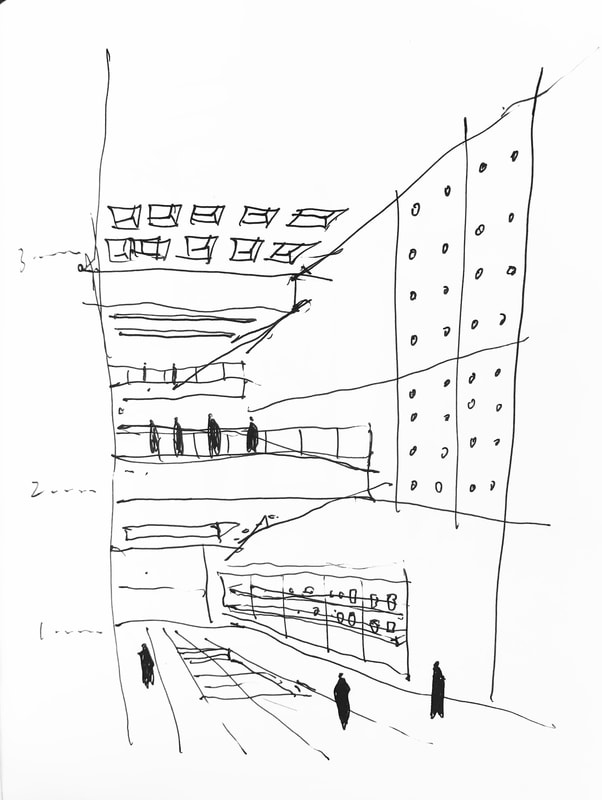 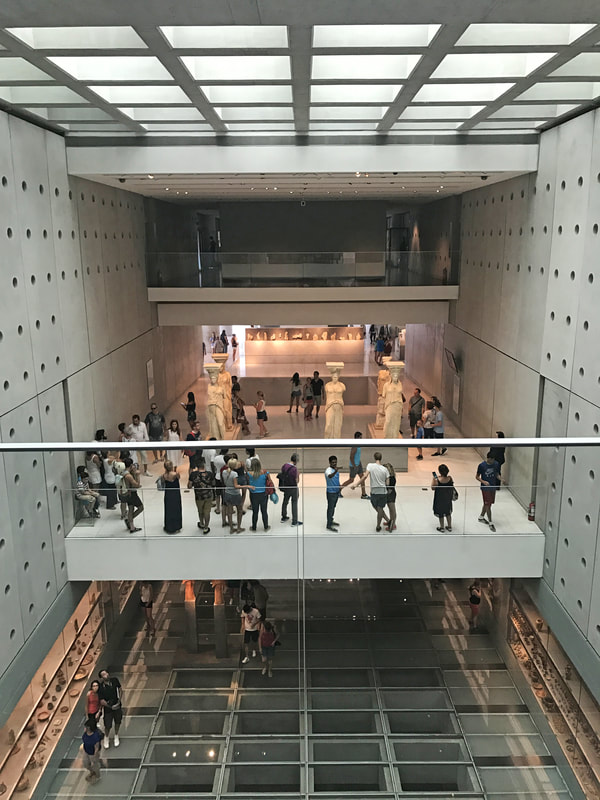 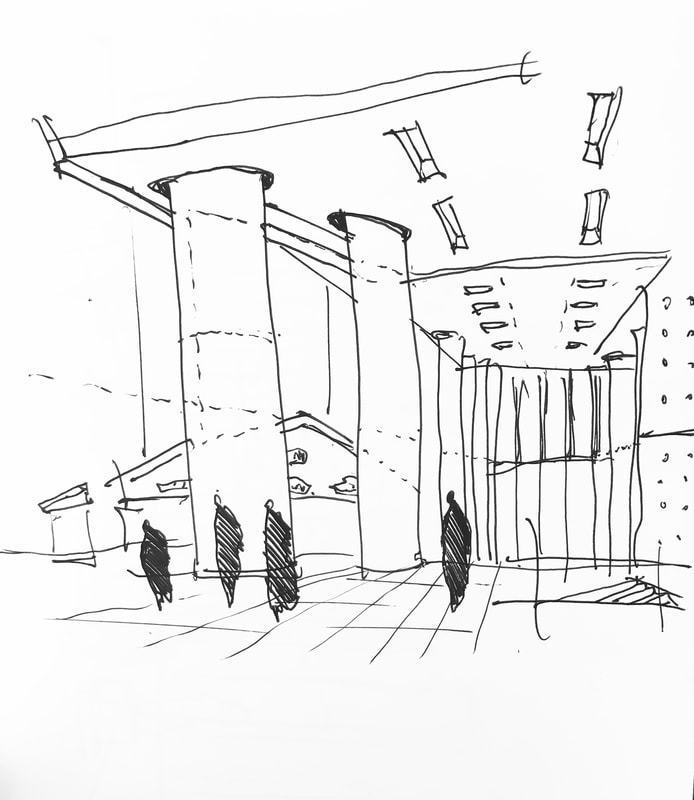 Visitors can't take photos in many areas of the museum, but doesn't mean I can't sketch it! >:D 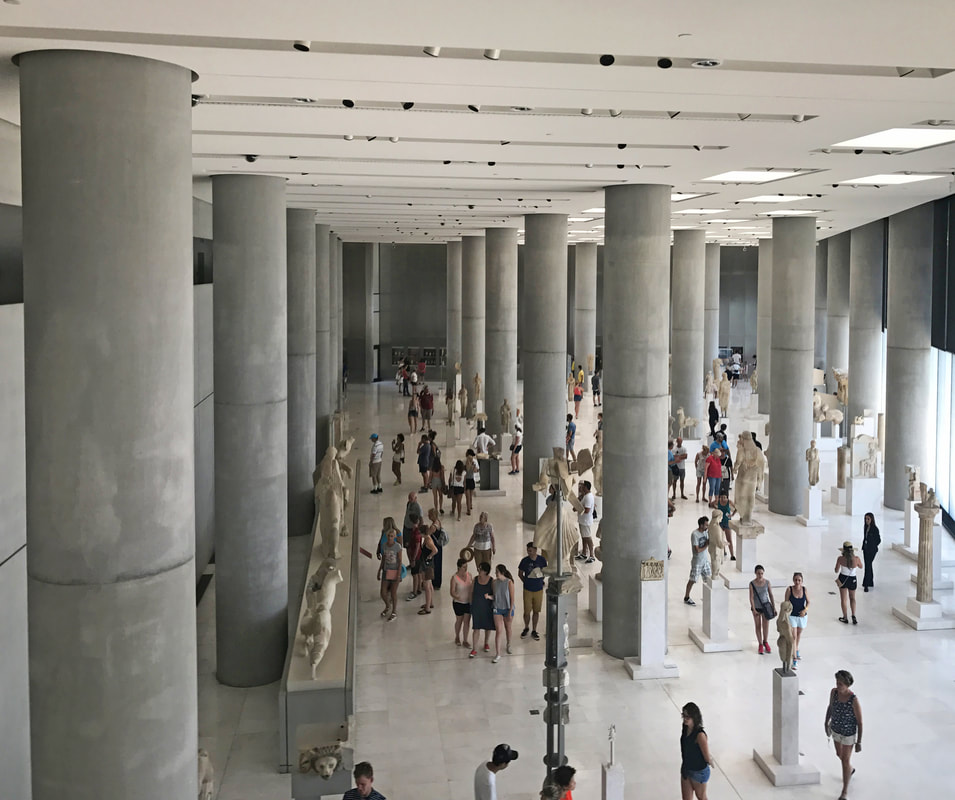 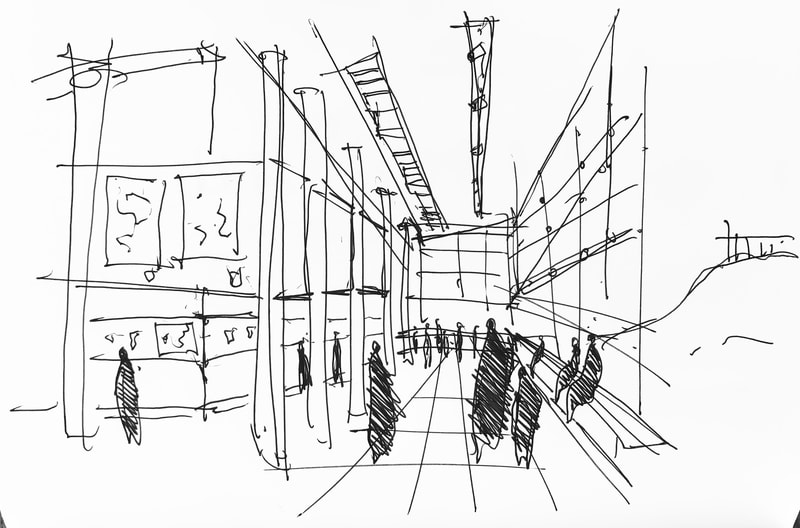 The top level displays the frieze from the Parthenon. The glass facade also gives direct visual to the Acropolis Reflection: I think overall the building does respond to the context. In many ways it tries to mimic the journey to Acropolis. The Architect used a lot of compress-and-release technique throughout the project starting from approaching the building (descend) and then release under the overhang entrance, and then again compress it in the lobby and release later at the slope. The entrance sets up certain monumentality, but overall it doesn't take away the focus on the Acropolis. The part I have certain doubts is the circulation of the museum, the open floor free-flow path I think personally is chaotic and there's no sequence to the display. I had a hard time orient myself in the museum in terms of where to start or where to stop, as if the architecture only tells half of the story, and the visitors have to fill in the other half. But does the work still remain a work if it stands outside all relations? Is it not essential for the work to stand in relations? Yes, of course-except that it remains to ask in what relations it stands." -Martin Heidegger Are the sculptures of the Parthenon still art work even if we removed them from where they belong? Stavros Niarchos Foundation Cultural Center (2008-2016) The foundation is designed by the Italian architect Renzo Piano. The project took nearly 8 years to complete with €566 million budget. I think the project is supposed to give Athens a jump start from the economical crisis and also give the community and future generation some hope. 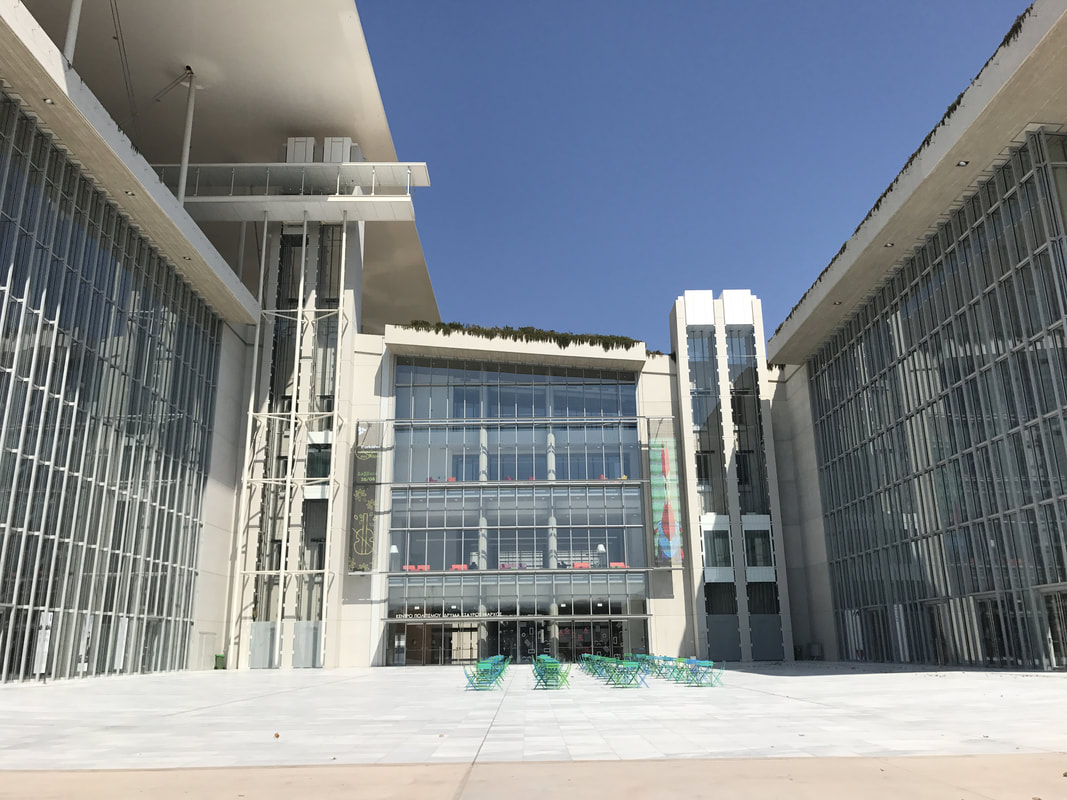 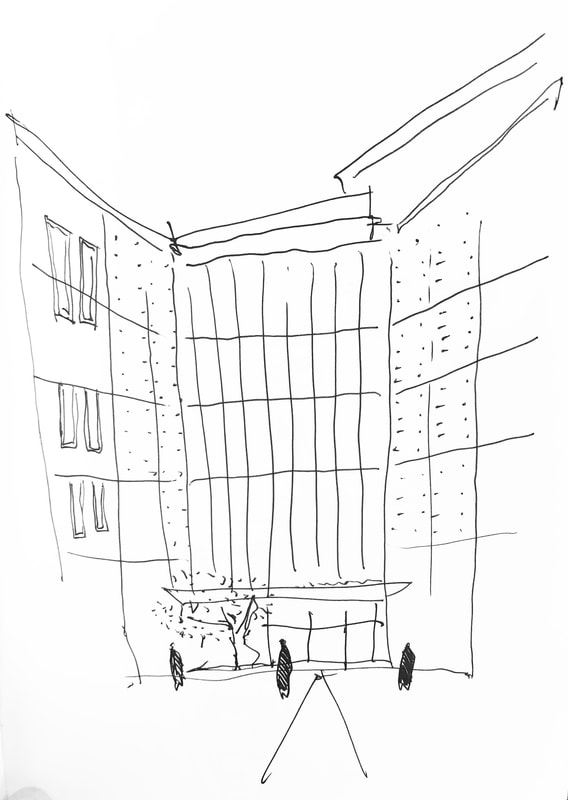 From mullions to tiles to structures, everything lines up perfectly in Renzo Piano's building 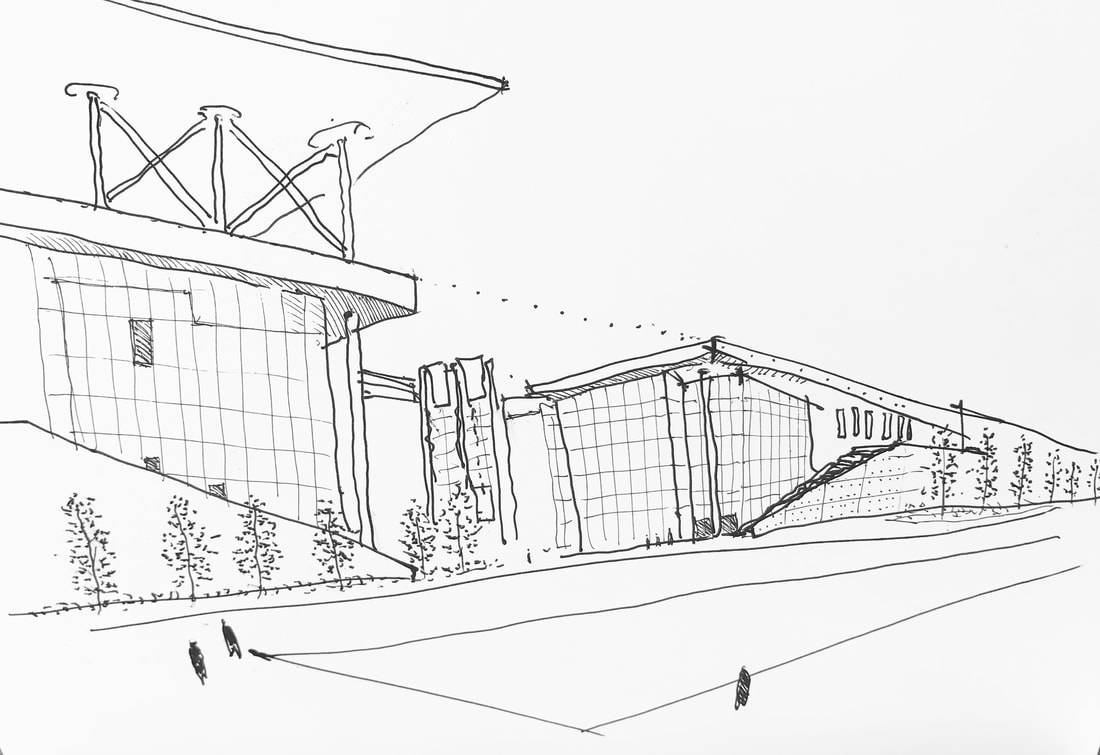 Reflection:
I think there is similarity between the culture center and the new acropolis museum. That sort of slopping up, the ascending concept is also being used here, but only Renzo pushed the concept even further. The idea of reaching a high ground for scenery can also be seen here. This is not the first time, however; Renzo has already done this technique with the Whitney Museum at NYC with the observation deck as an extension element to the building, only this time he provided a panoramic rooftop terrace that connects to the largest park of the city. The building is constructed with incredible amount of details. The way things connected together and line up perfectly are very difficult to achieve especially for this kind of international commission. However; I am not sure if the long water pool is a good move since it seems like an abrupt transition between the stage-like-stairs and the entry plaza, and it's also a large unoccupiable space during extreme weather seasons. After seeing contemporary architecture around Europe and United States, and classical architecture around Italy and Greece, I think it's time to head back home and re-examine certain vernacular architecture and traditional temples in Taiwan so I can understand the idea of context in architecture even more.
0 Comments
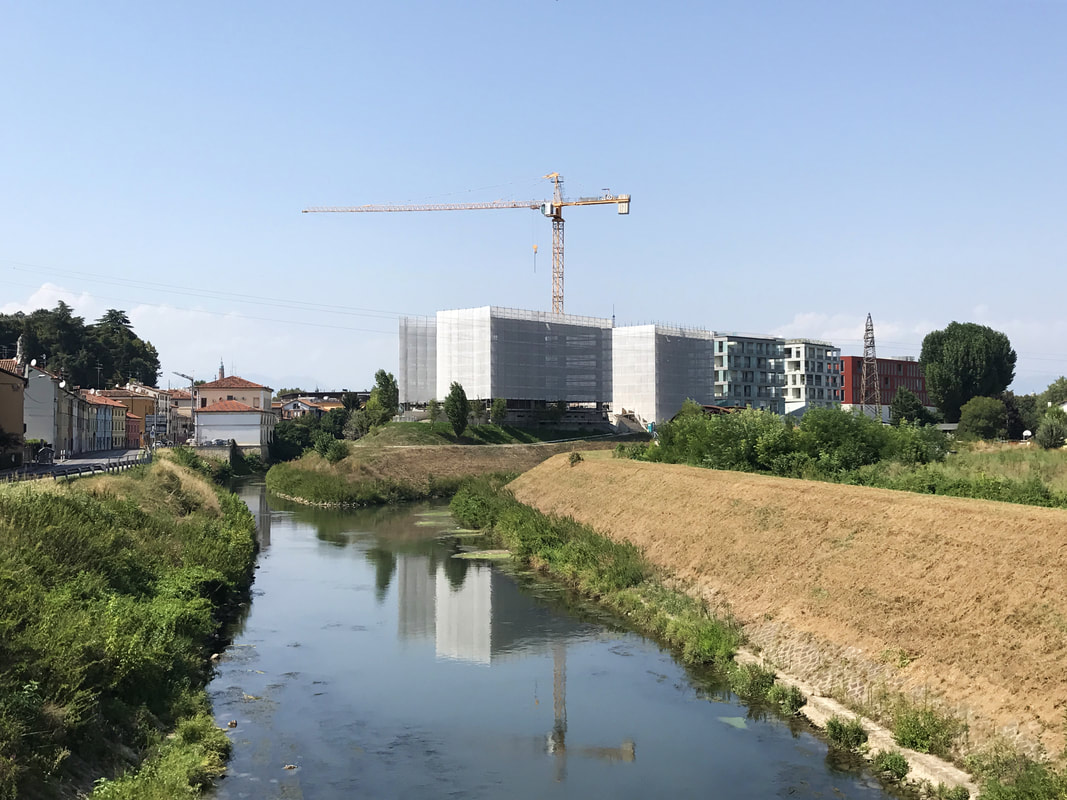
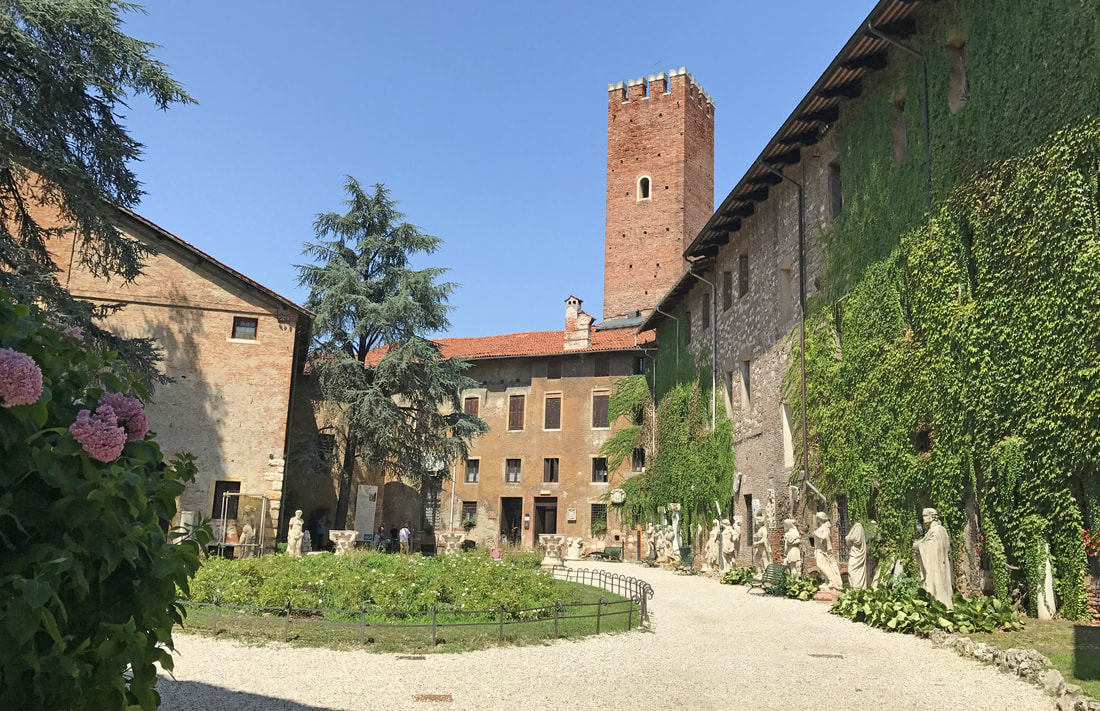
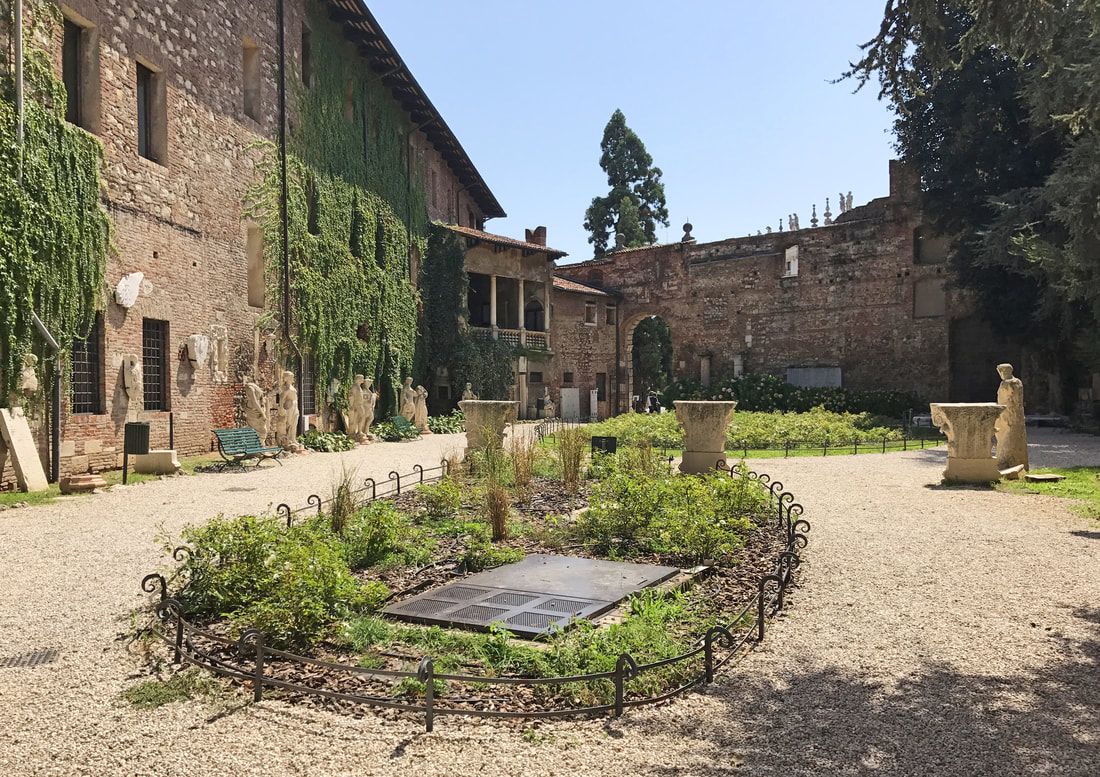
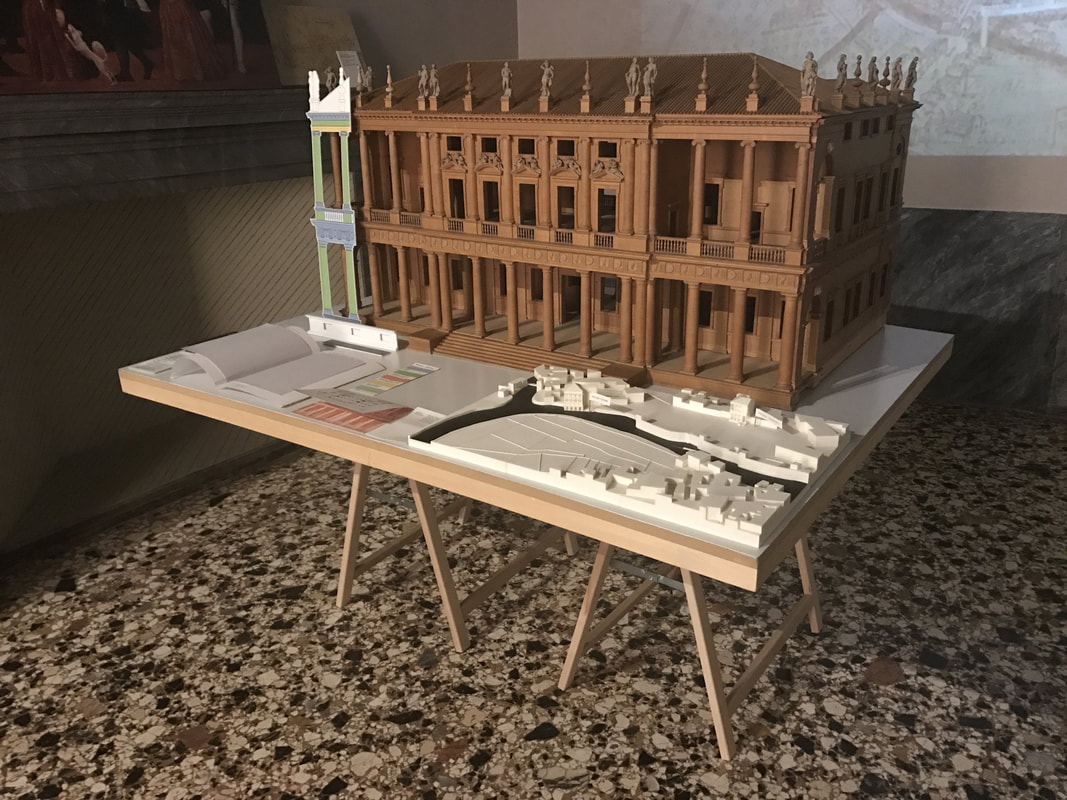
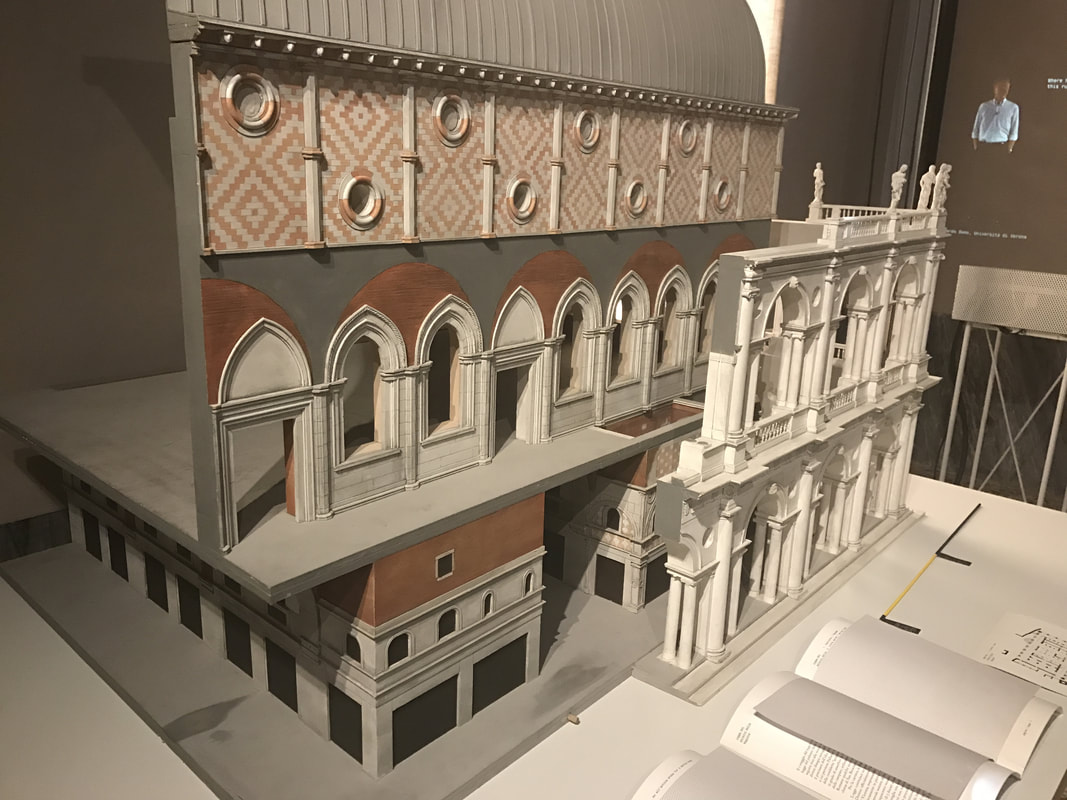
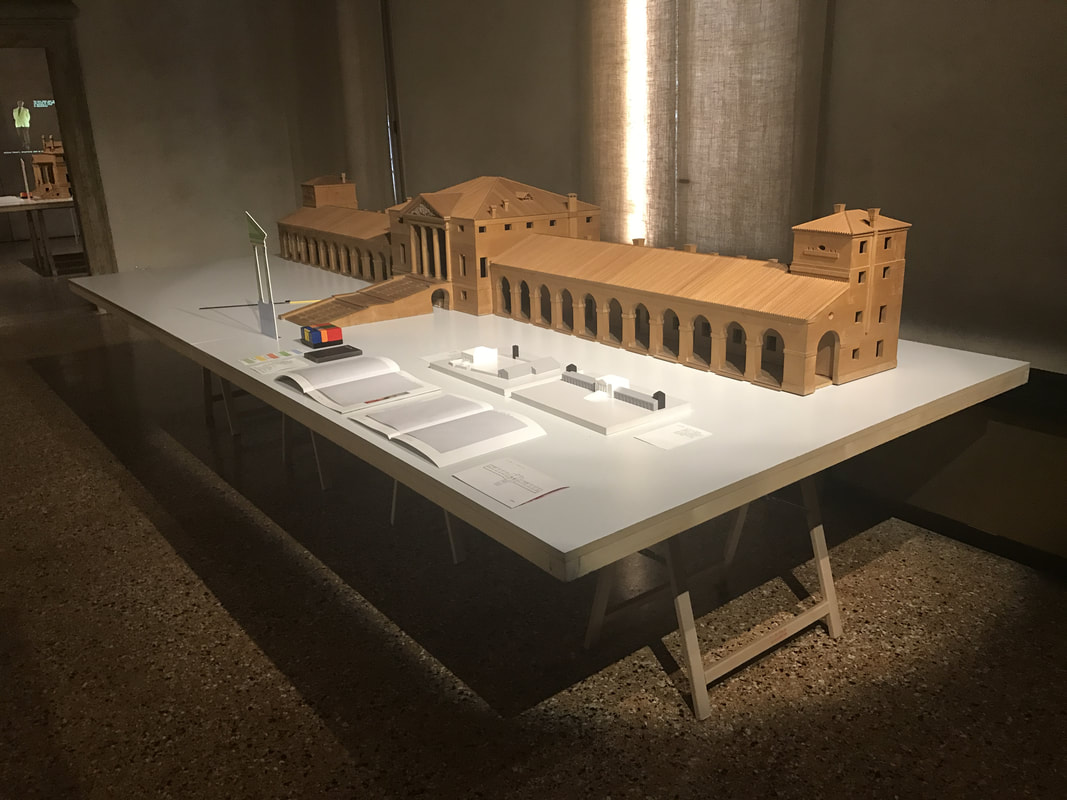
Vicenza was founded back in Roman era and later on came under rule of the Republic of Venice. Similar to Volterra, Vicenza also has these layers of histories with buildings sitting on top of the Roman ruins. The layout of the city is heavily guided by the pre-existing Roman ruins and the rivers surrounding it. 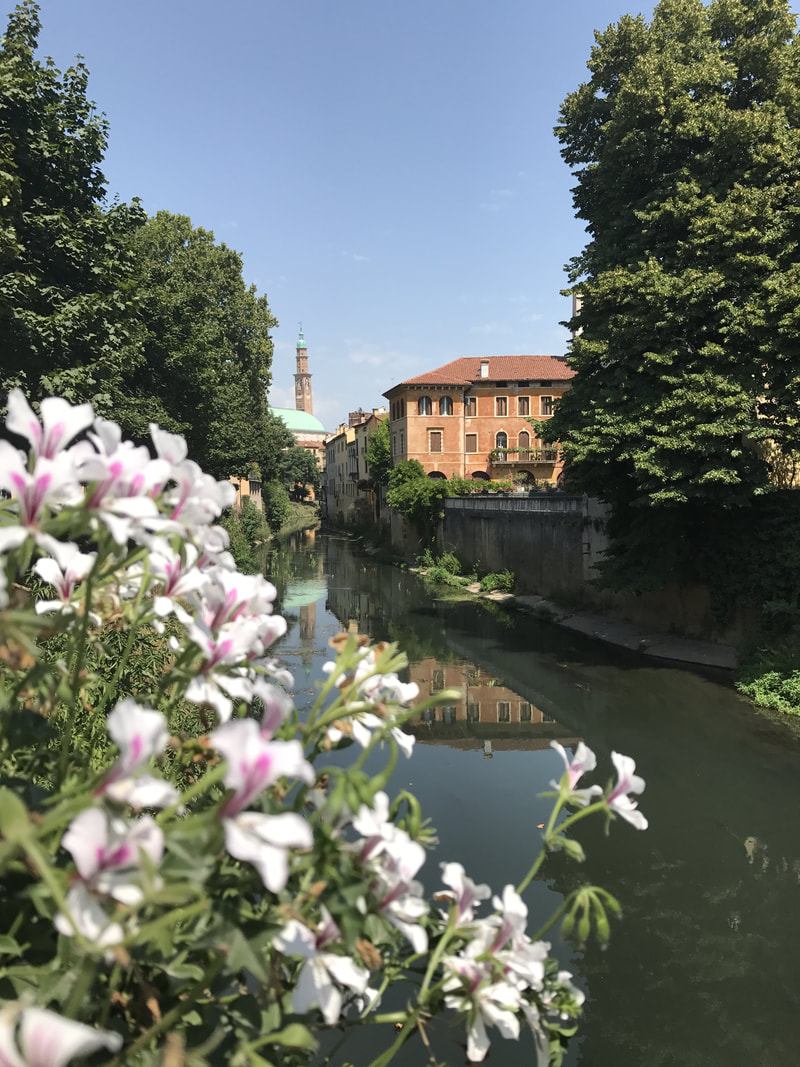 Rivers carving through the city 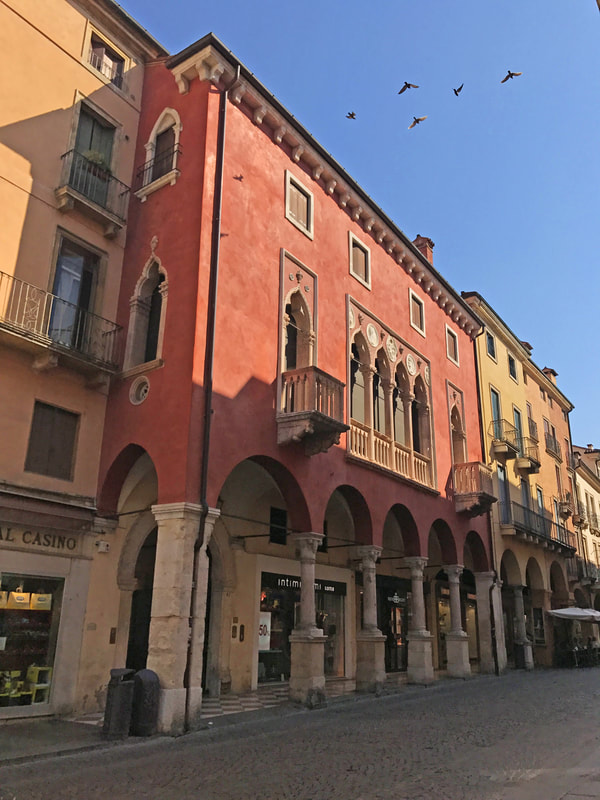 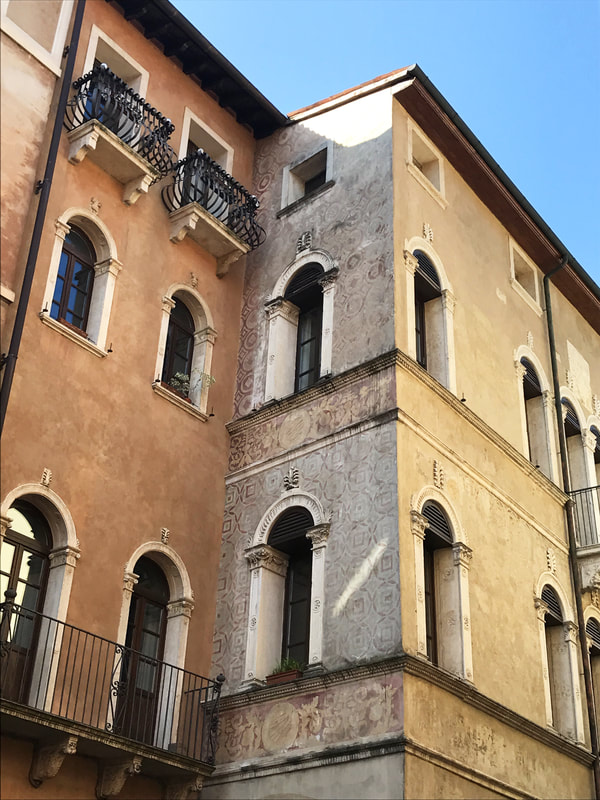 Some of the original paint can still be seen on the facade through out the city 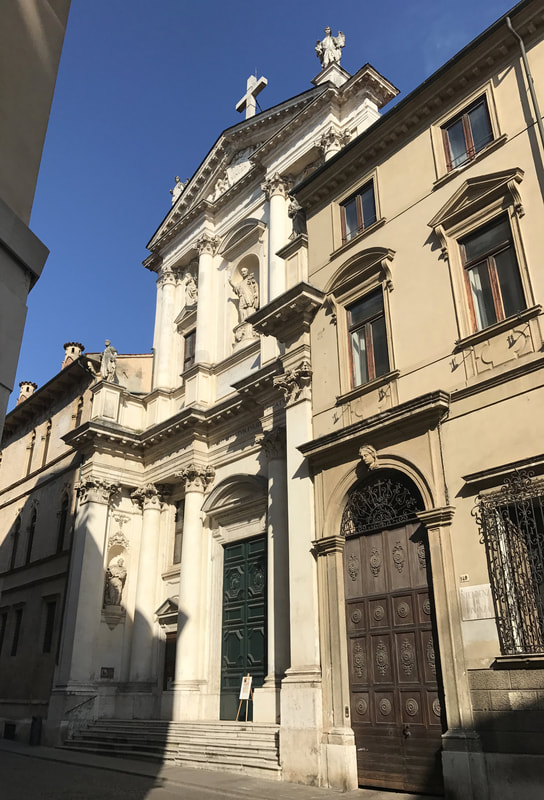 There's a surprise in every corner! 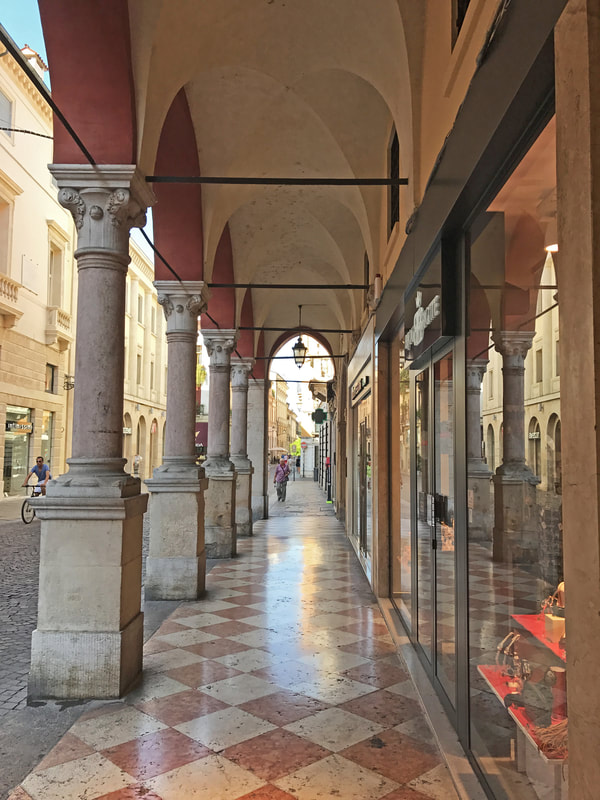 Future of the city: Vicenza is still growing as they planning out a mixed use district in the outskirt of the old town Andrea Palladio (1508-1580) I decided to pay Vicenza a visit because of Andrea Palladio's works. Many claim that Andrea Palladio is the most influential architect of the Western World. His publication I Quattro Libri Dell'Architettura (The Four Books of Architecture) established standards for the Palladian Style architecture, and later on being recognized by other nations including Thomas Jefferson of the United States, Catherine II of London, Russia, and Persia. Palladio gained his design language from classical buildings, especially from Rome. The style emphasizes a lot on symmetry and proportion. Palladio also designed with context in mind, he would include the site, religious references , cosmology, weather in his design. Theatro Olympico Theatro Olympico is Palladio's last work. It's the oldest still-functioning theatre space in Europe. The project is a re-construction of Roman theatre as if Palladio was Virtruvius himself. 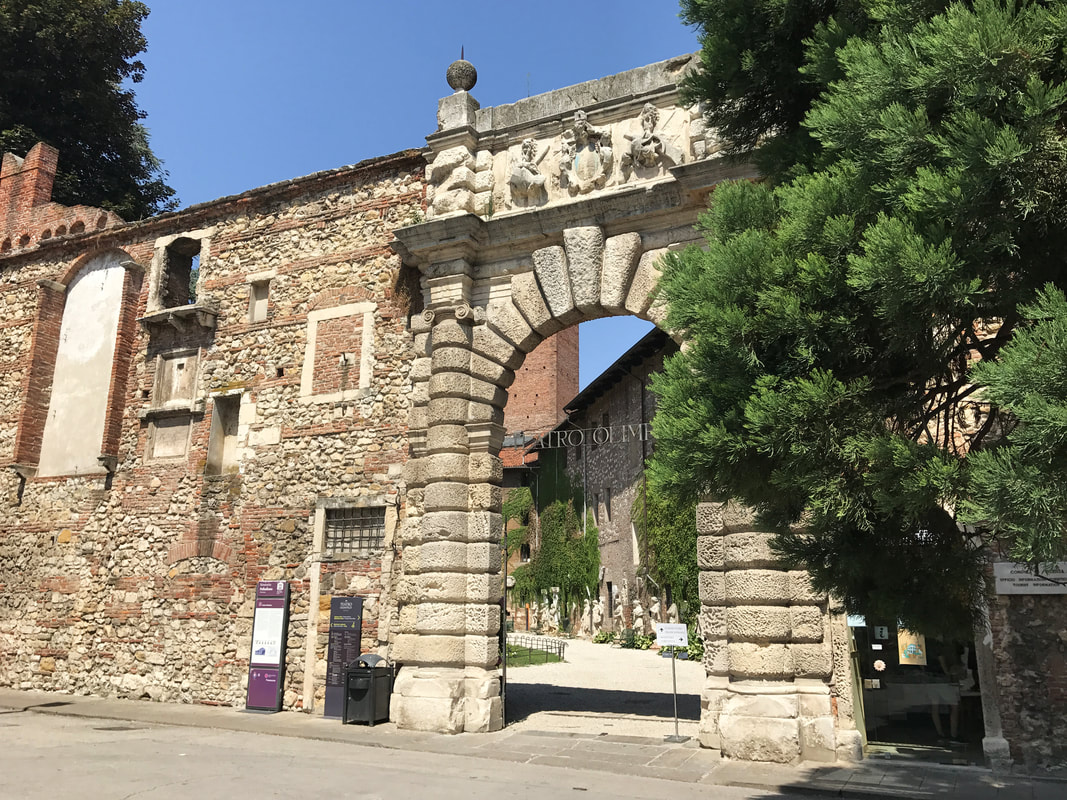 The entrance to the theatre 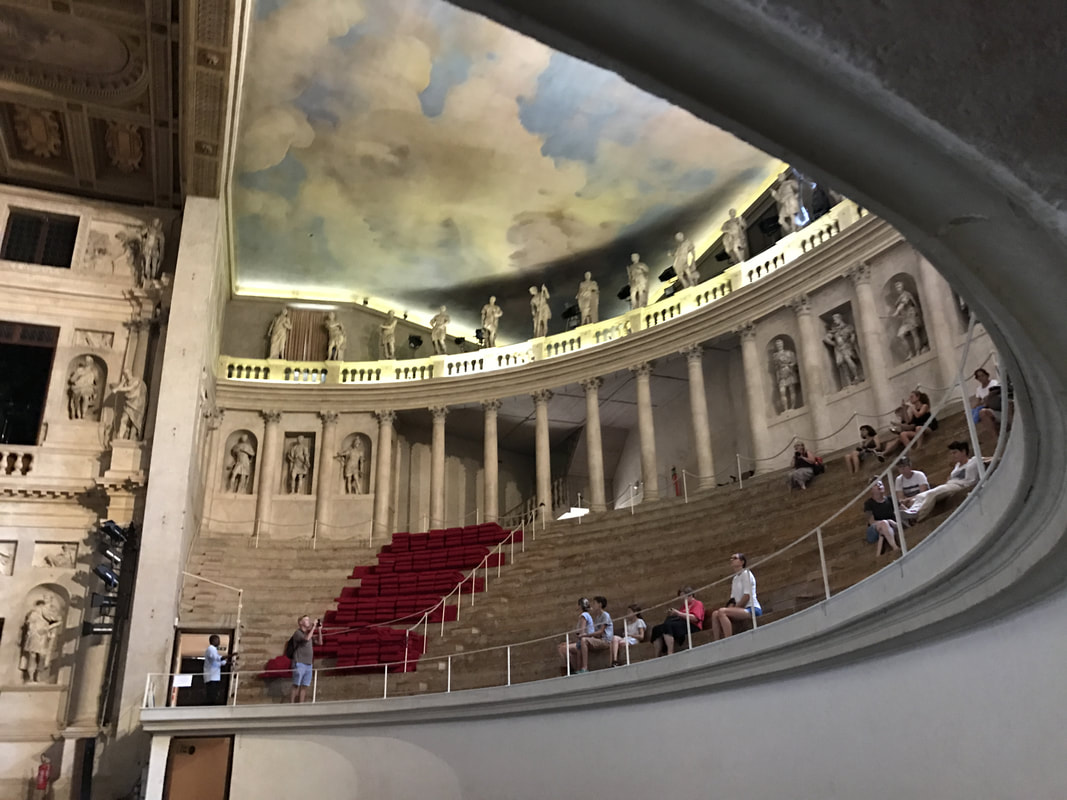 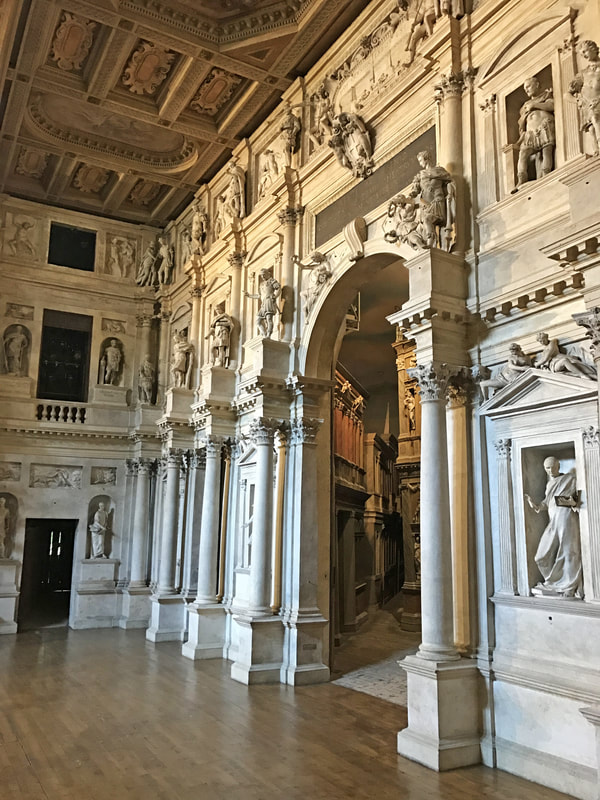 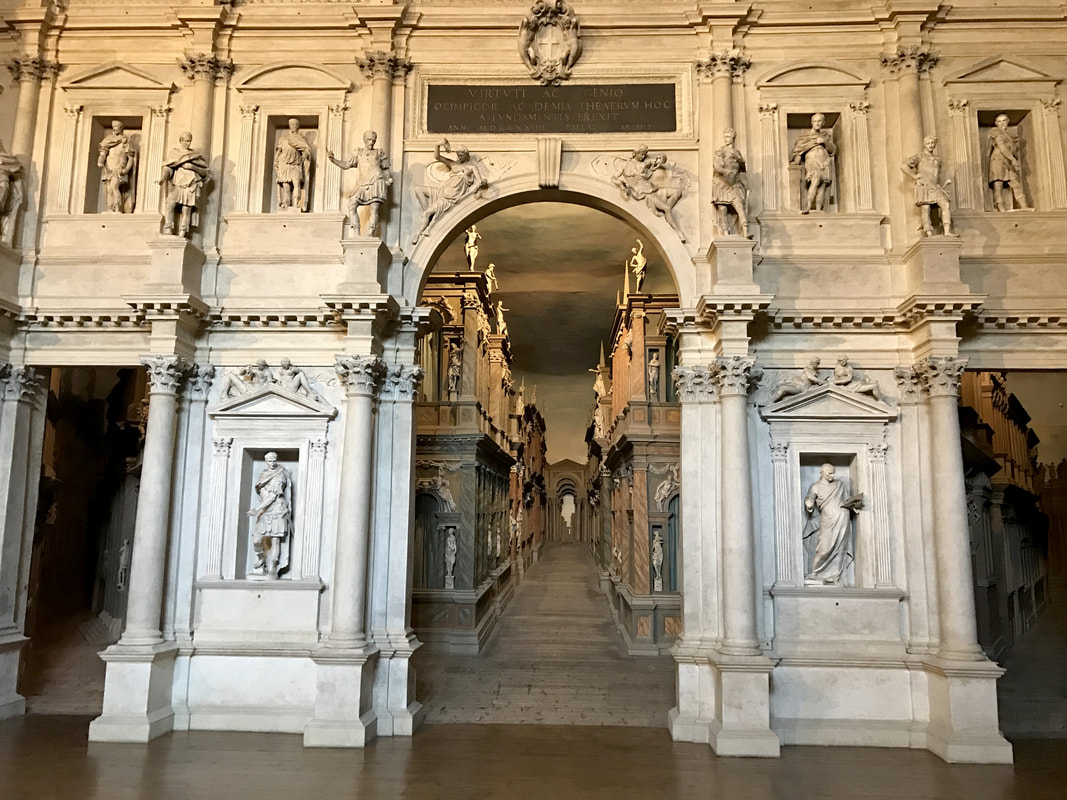 The techniques of vanishing point and perspective were already being used by the Roman. Palladio used slanted roof and floor to create a very dramatic stage 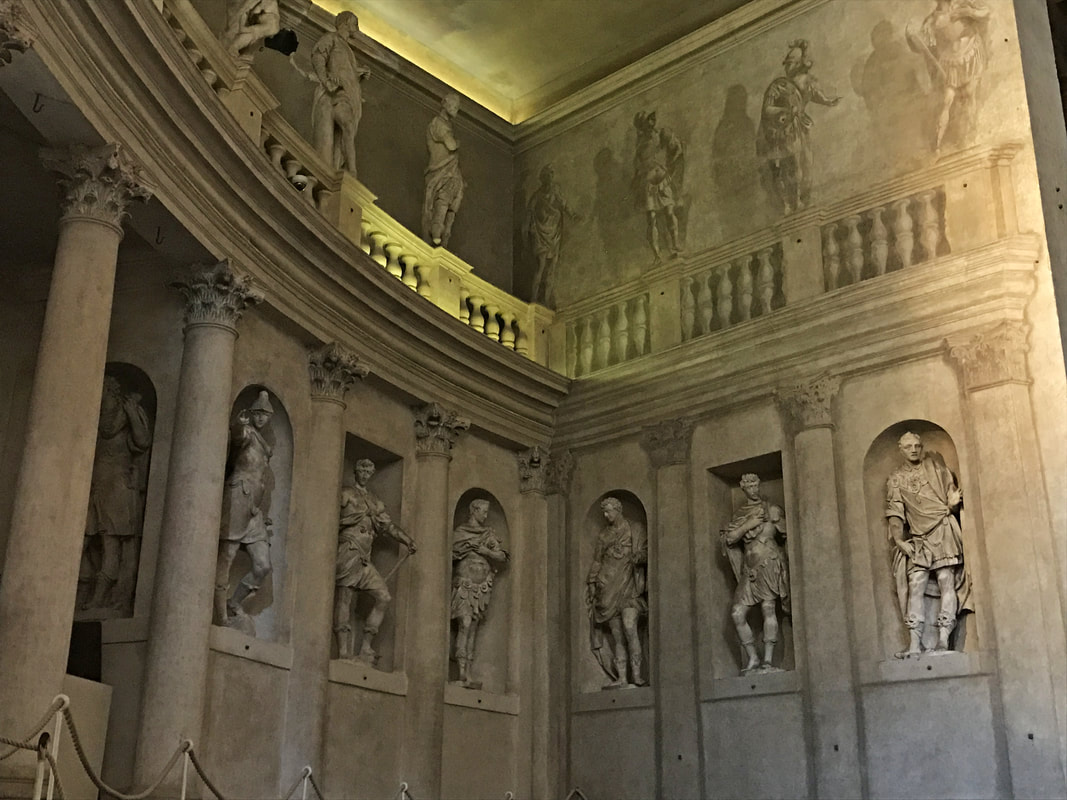 The use of two dimensional technique to help transition through walls 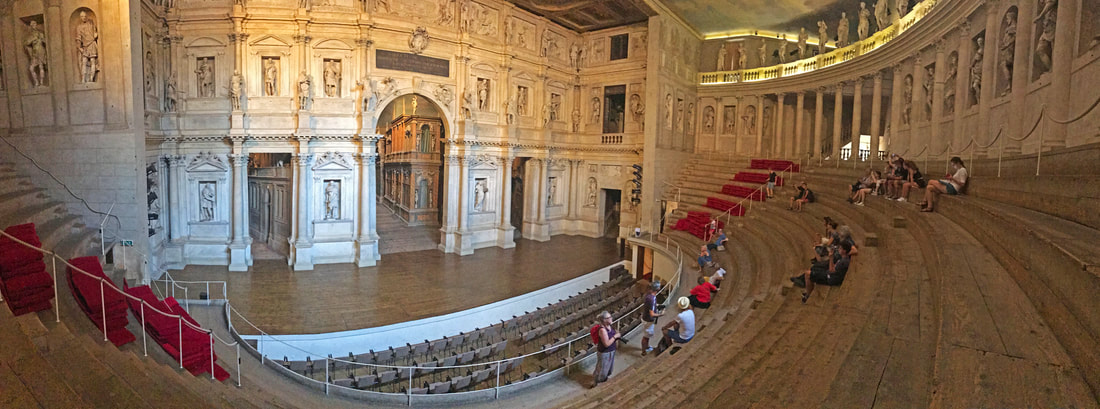 Villa la Rotonda First time I read about Villa Rotonda was back in Sophomore year history class. The image they shown was a bird's eye view photo of the villa, and I thought it was a mundane and not-so-interesting building even though at that time my professor spoke highly of it. Fast forward to grad school, many books I read had used Villa Rotonda as reference, even Peter Zumthor made a shoutout in his book, which got me curious about it. Sounds kinda funny, but I feel like my architecture learning process is kinda reverse. One should learn about the past first and then move forward to contemporary design, but I did not care about classical architecture at the beginning, and now the more I learn about architecture, the more I want to understand all the old precedents. Villa la Rotonda is definitely one of my favorite Western architectures after the visit. The building is a unprecedented masterpiece, and it's really about the idea. The site is one of the most pleasing and delightful that one could find because it is on top of a small hill which is easy to ascend; on one side it is bathed by the Bacchiglione, a navigable river, and on the other is surrounded by other pleasant hills which resemble a vast theater and are completely cultivated and abound with wonderful fruit and excellent vines; so, because it enjoys the most beautiful vistas on every side, some of which are restricted, others more extensive, and yet others which end at the horizon...” 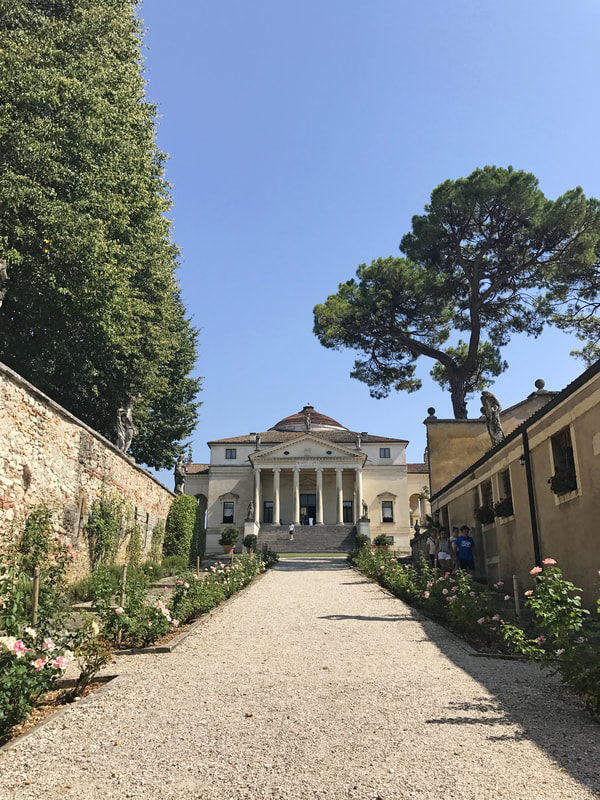 Just as the quote above mentioned: the hill site allows an easy ascend entrance and creates a dramatic view 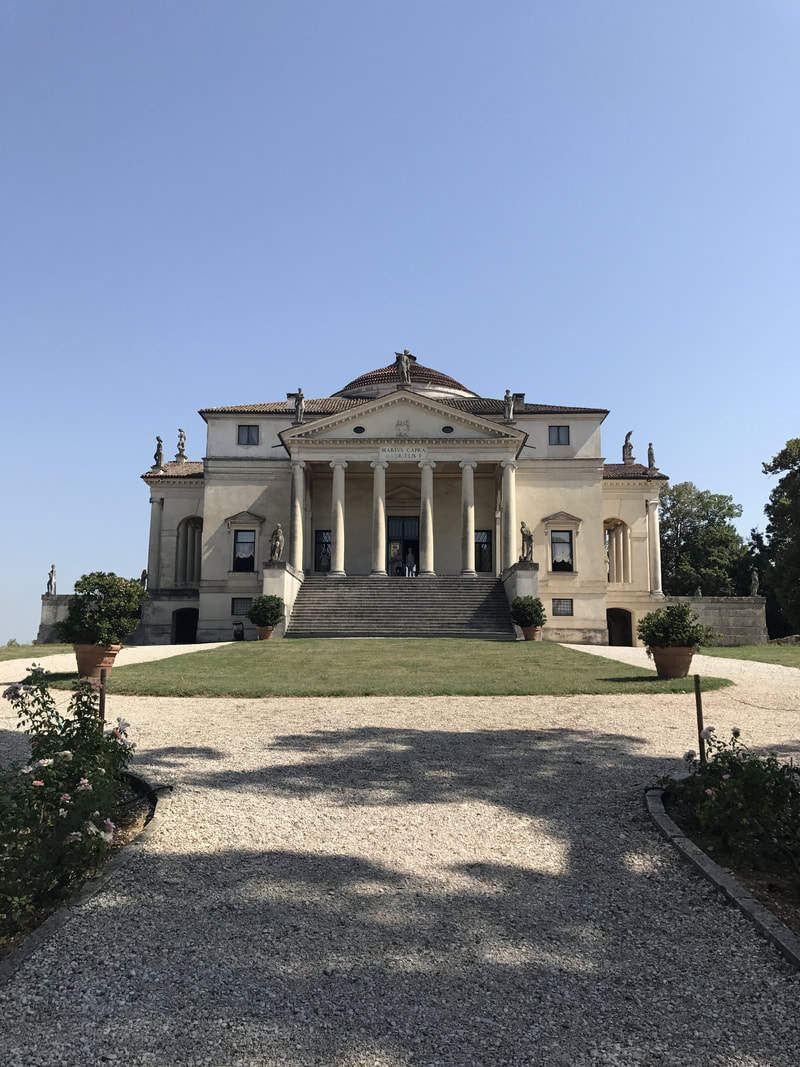 A little background about the villa according to the introductory panel: "The opportunity to realize this vision came to Palladio from a special person, Paolo Almerico (Vicenza 1514–1589), who was not only a papal prelate but also an intellectual, a member of a refined cultural circle of that time, a poet and a man of letters, who wanted to build for himself a ‘villa’, just out of Vicenza, for his retirement, after a career in Rome at the Papal Court. " Palladio planned 20 villas but only two of them, La Rotonda and Villa Trissino di Meledo (that would never be built) have the peculiar plan that sets them apart: the central round hall with the domed vault, inscribed in a square, with four facades, each with a projecting portico and steps, 6 Ionic columns. Andrea Palladio intended to transfer into civil architecture a ‘sacred’ inspiration, using a plan already present in religious architecture (such as S. Pietro in Montorio temple in Rome); this idea comes out of his well known archaeological studies and is suggested by many scholars to be derived from the Roman temples. The particular site, the special personality of Paolo Almerico and Palladio’s meditations on ancient art came together in this unique opportunity for Palladio, who was finally able to realise his vision of a villa-temple. Perfect and researched proportions, expression of a measure where tout se tient are in front of the visitor at La Rotonda: you can feel an emotion that touches the spirit. " 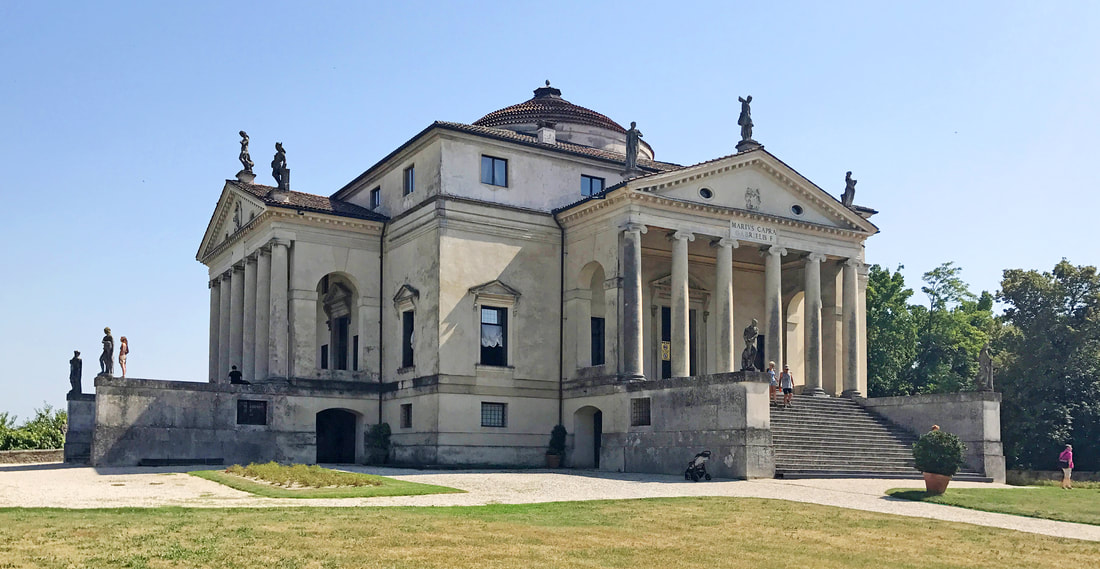 The four corners of the villa are sitting on the four cardinal directions (Ex: North, West, East, South). Through out the whole project, Palladio wanted to create the relationship between human imperfection and the Divinity. The dome and the mirrored floor plan resemble a juxtaposition of sphere and square, which ultimately reference back to the cosmology at that time. Originally, Palladio designed the villa with an open dome, just like the Pantheon, the four rooms facing within would then create a street scene or like a miniature city. 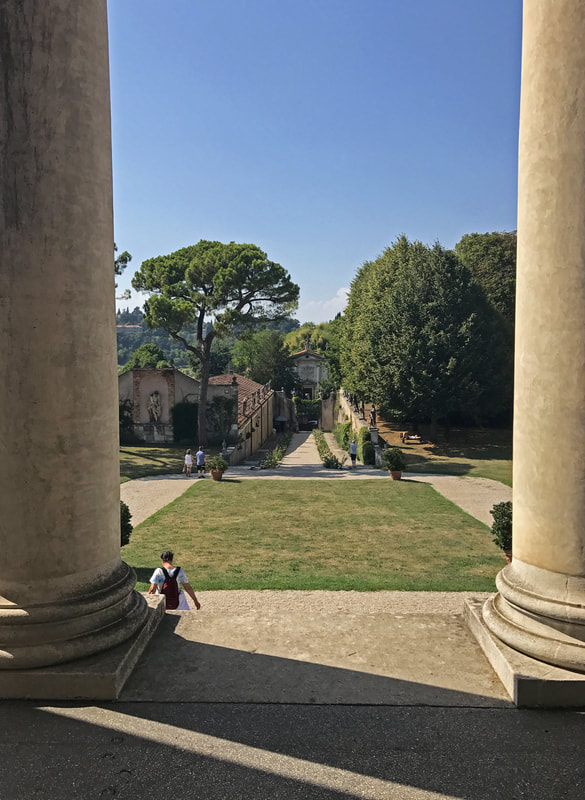 Palladio designed the slope of the stairs so that you can't see the steps at the top level. It gives a true sense of elevating above and getting closer to Divinity 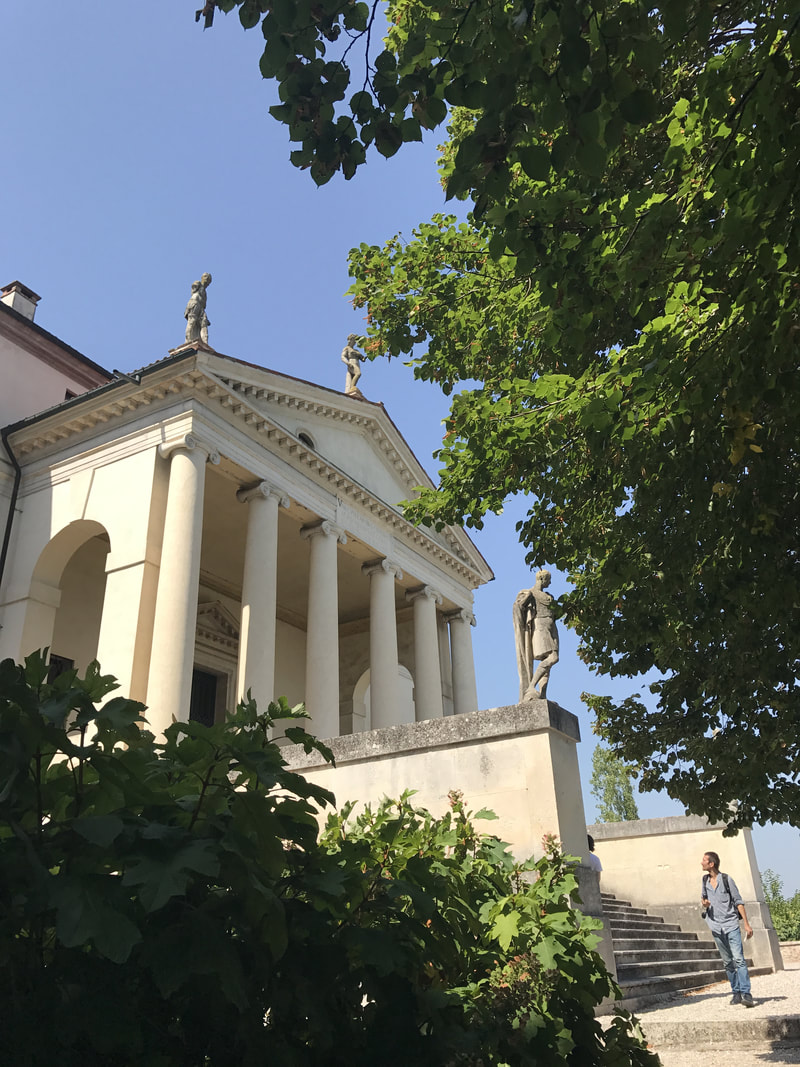 The most interesting part of the project for me is that Palladio really mastered the design language of classical architecture and used this project to create his own. It's not Roman architecture anymore, it's Palladian! The idea of combining Cathedral design with residential unit, and the same time fulfill it with the context and the surrounding is what makes this building iconic. Palladio Museum Palladio Museum has done a great job presenting the source materials. It covered Palladio's life story and many of his work in details. I highly recommend visiting if you find yourself at Vicenza at some point. 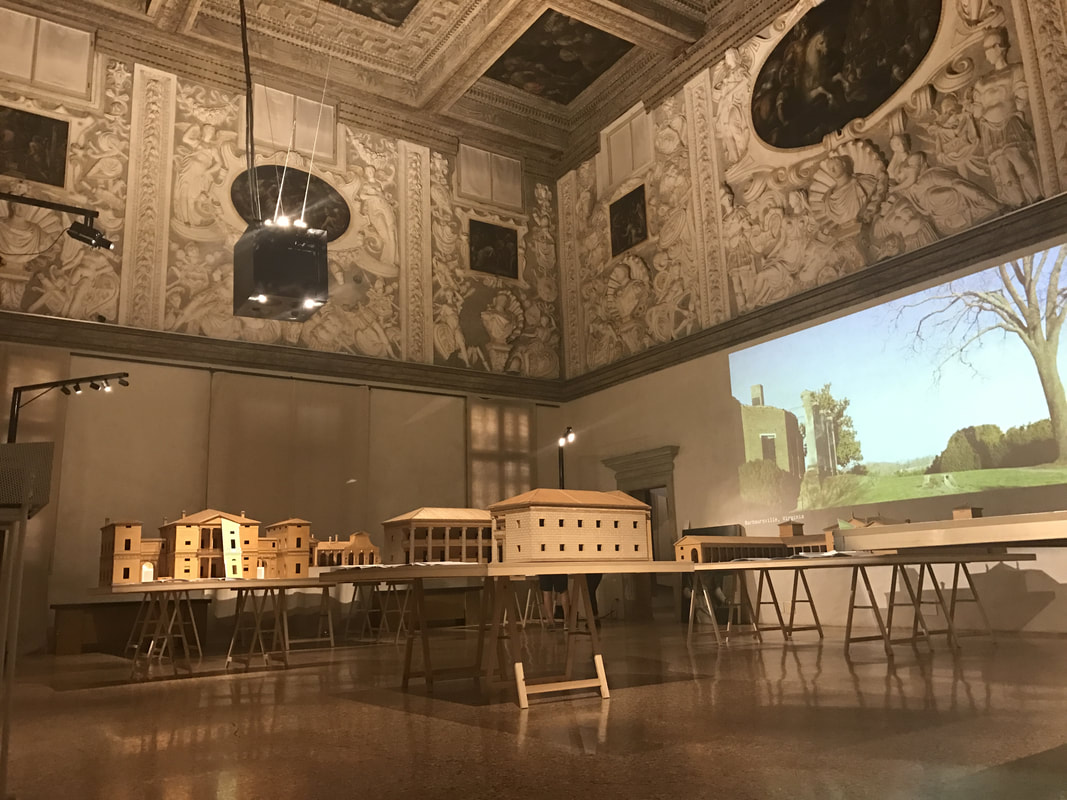 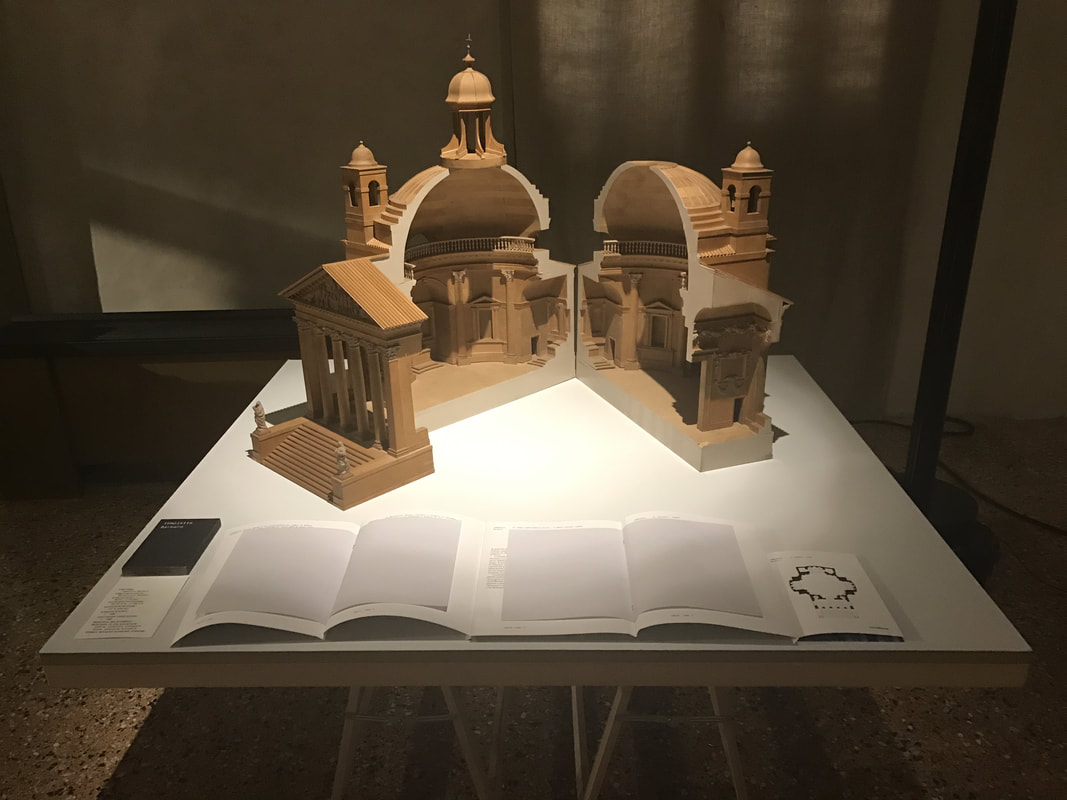 Other Palladian Buildings Vicenza houses many of Palladio's buildings. The city of Palladio became a UNESCO World Heritage Site in 1994. I'm not going to talk about all his projects. This blog only covers the very surface of his work. If you're interested in knowing more, there are a lot of publications and videos out there! 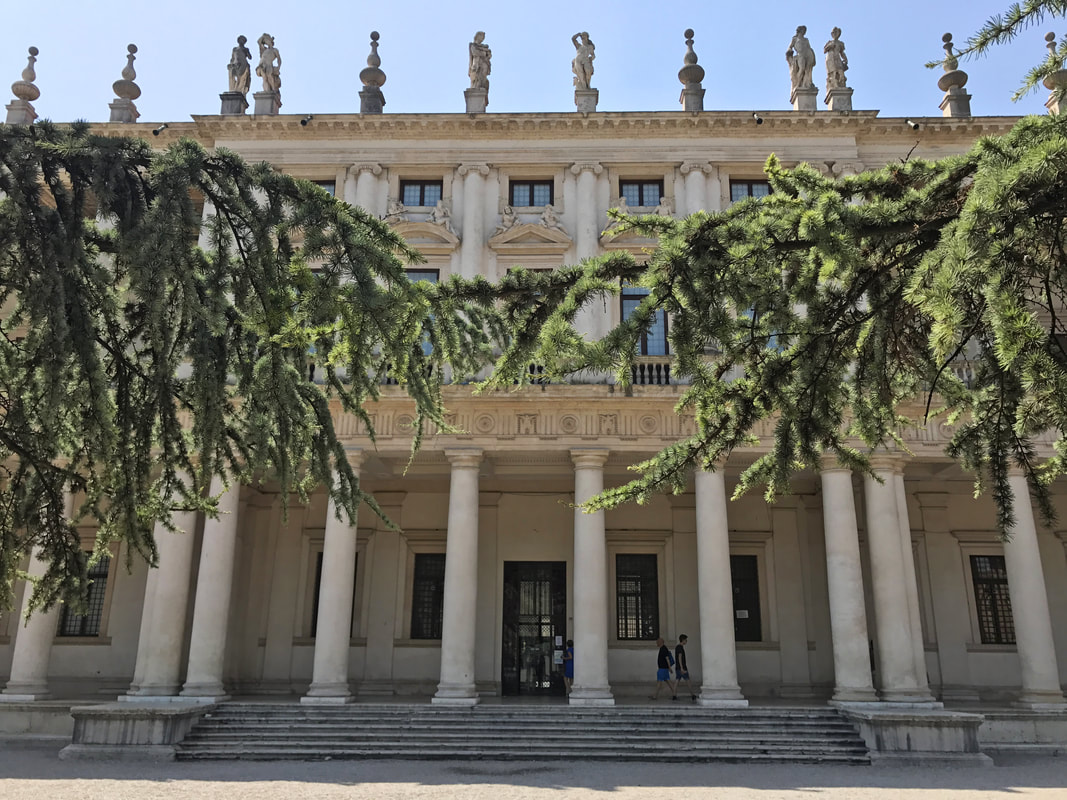 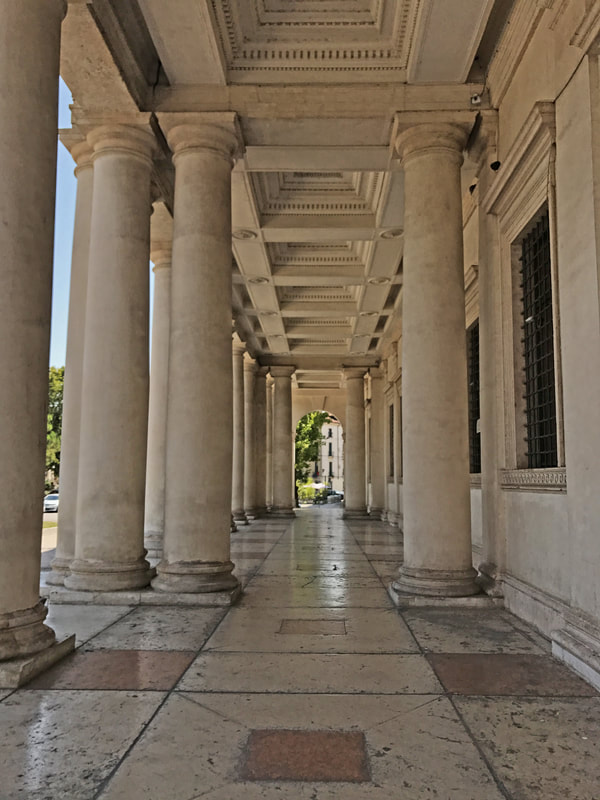 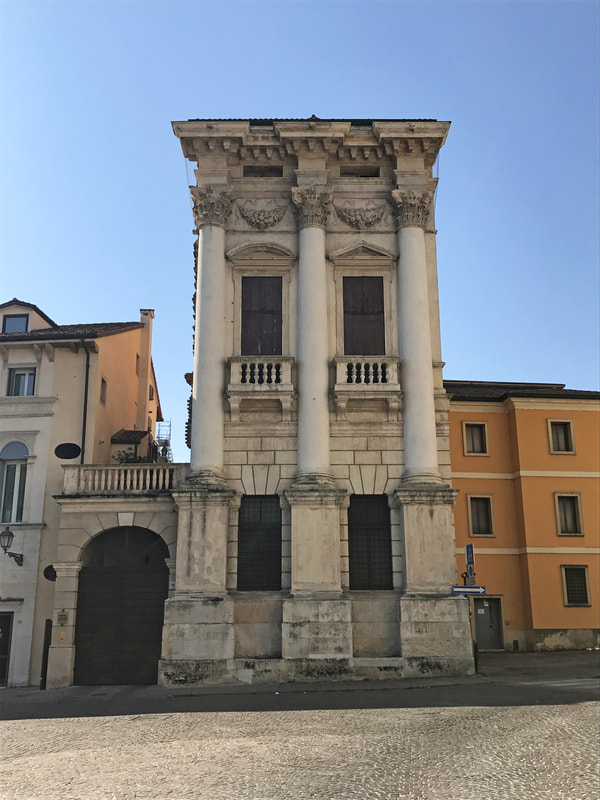 One of the Palladio's unfinished buildings
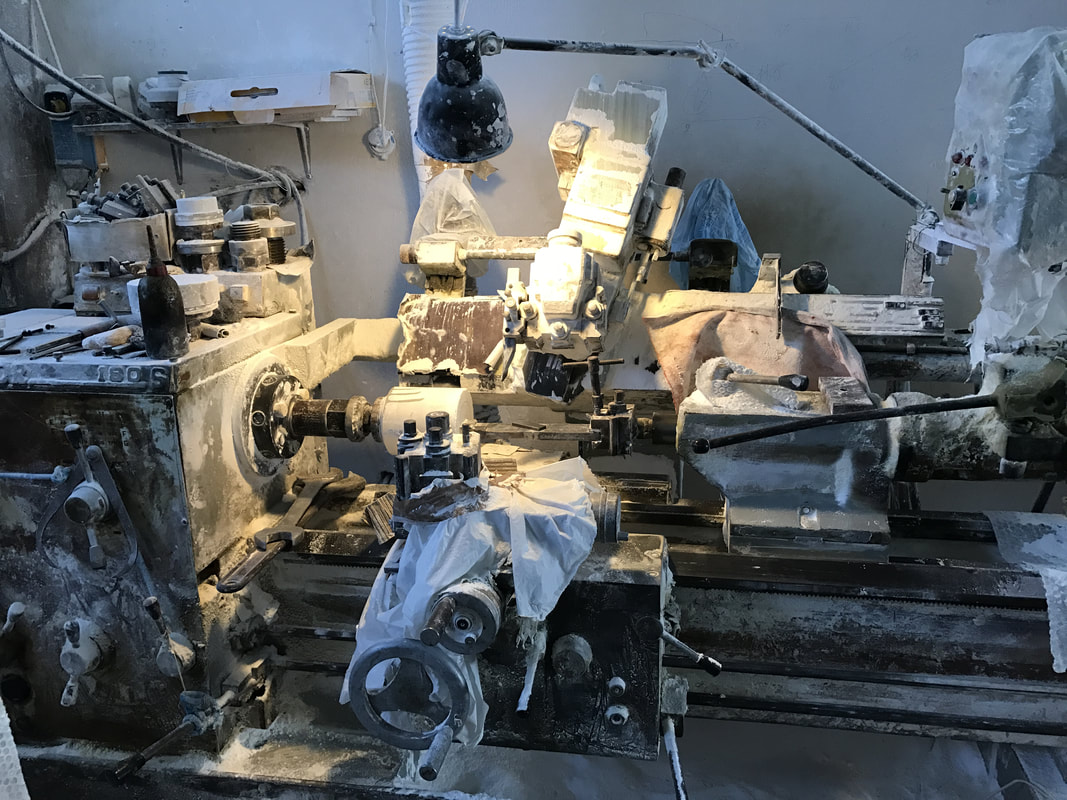
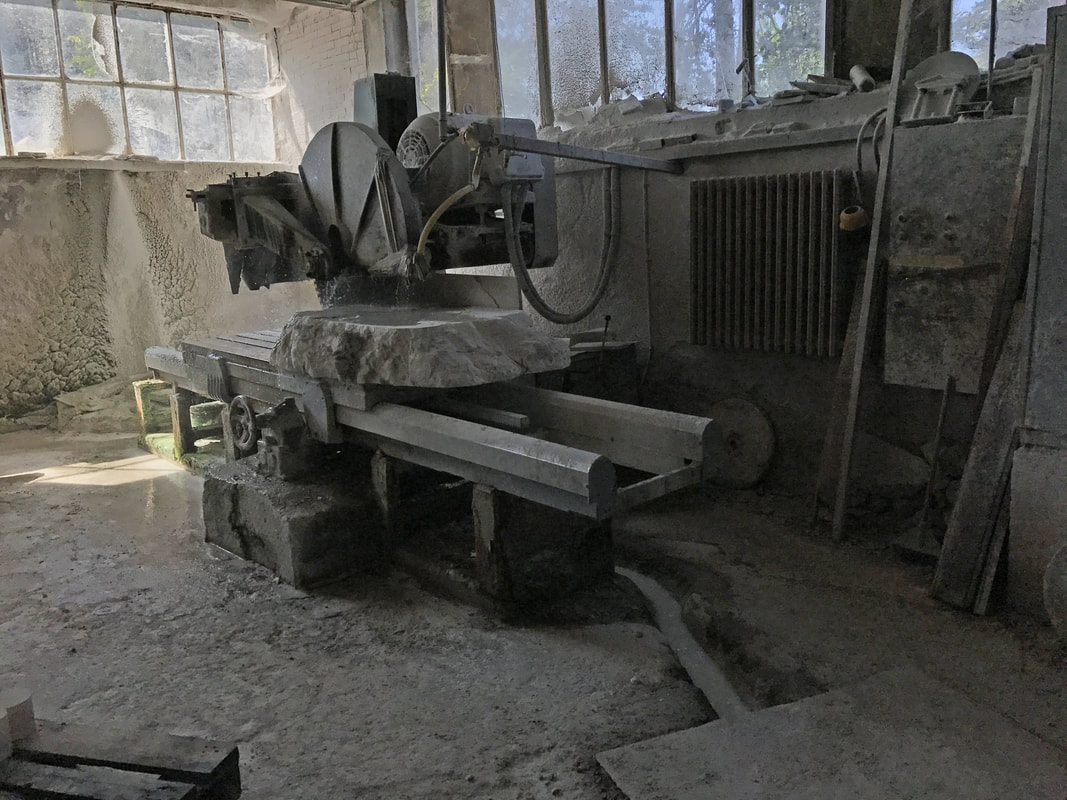
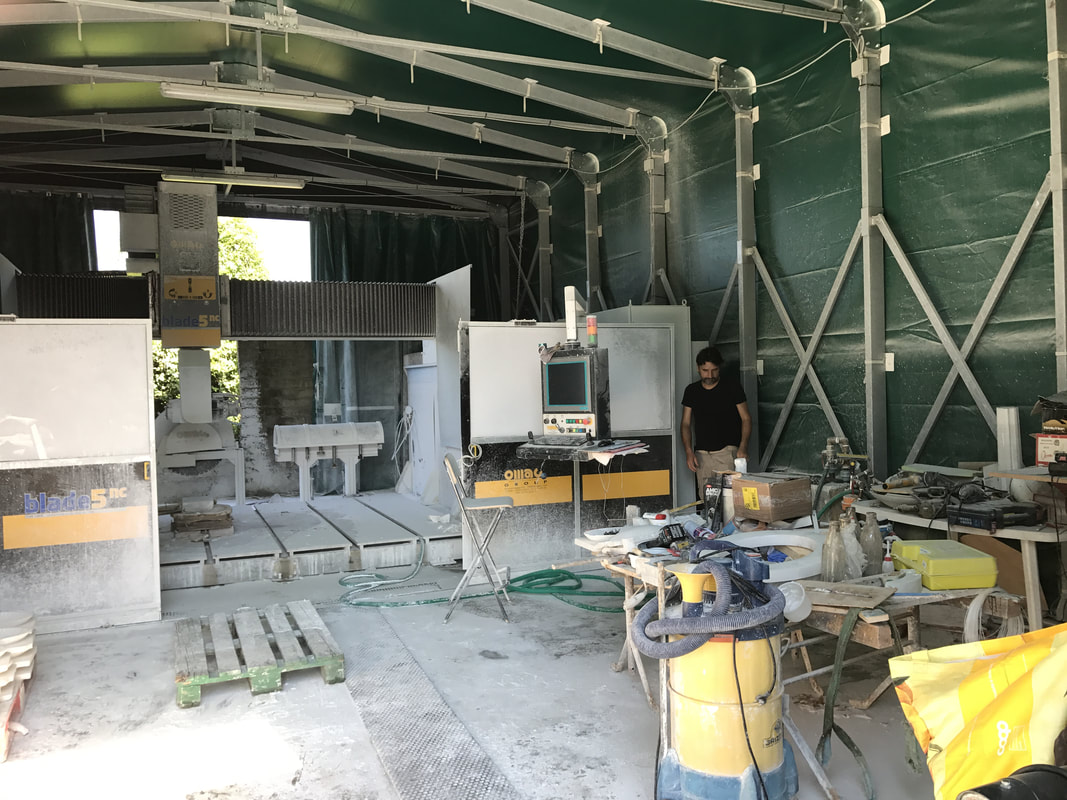
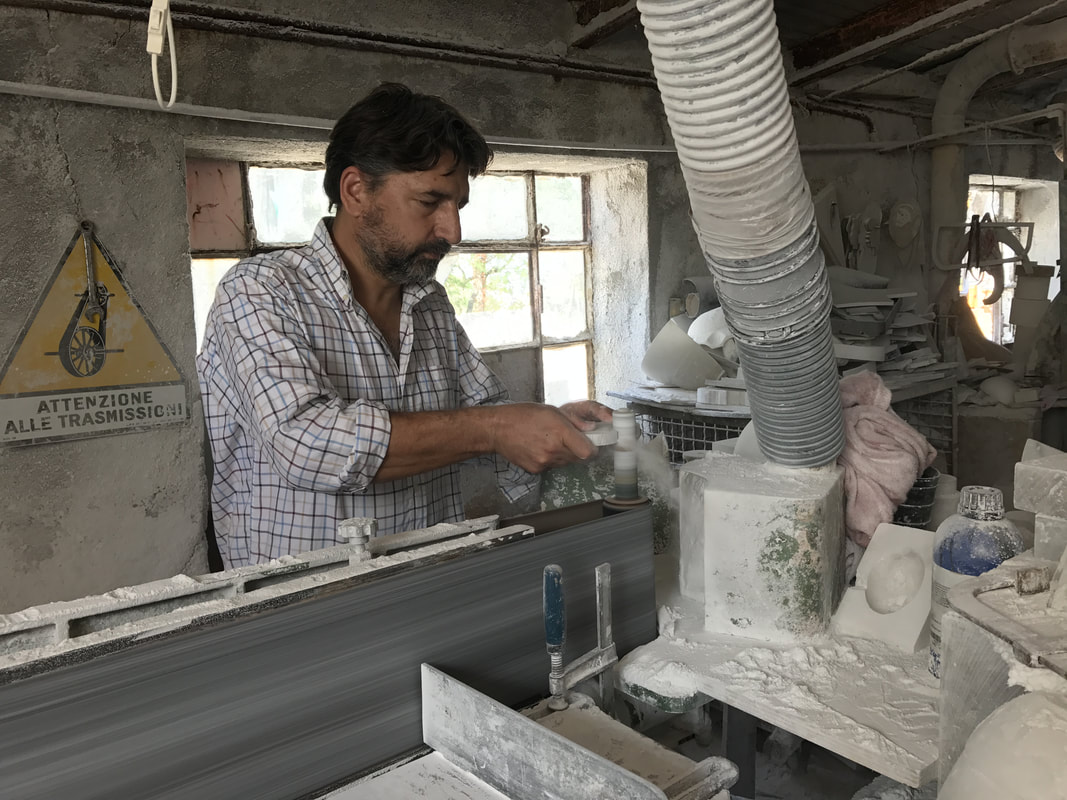
Alabaster Workshop
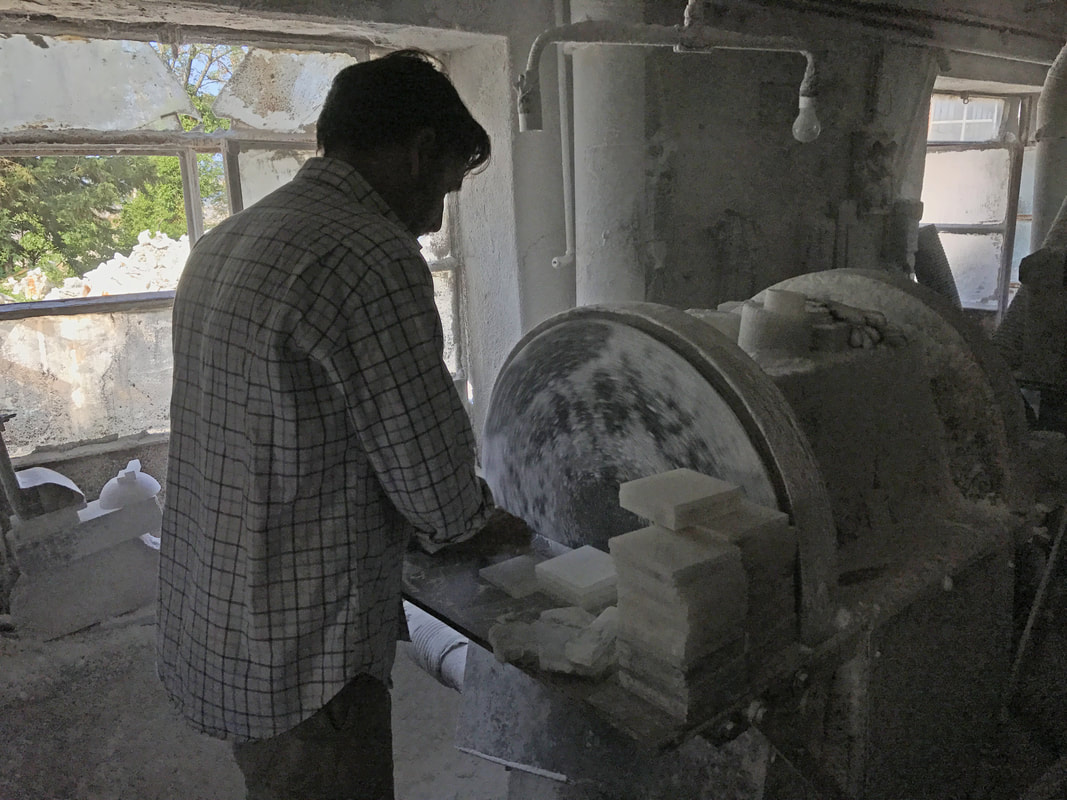
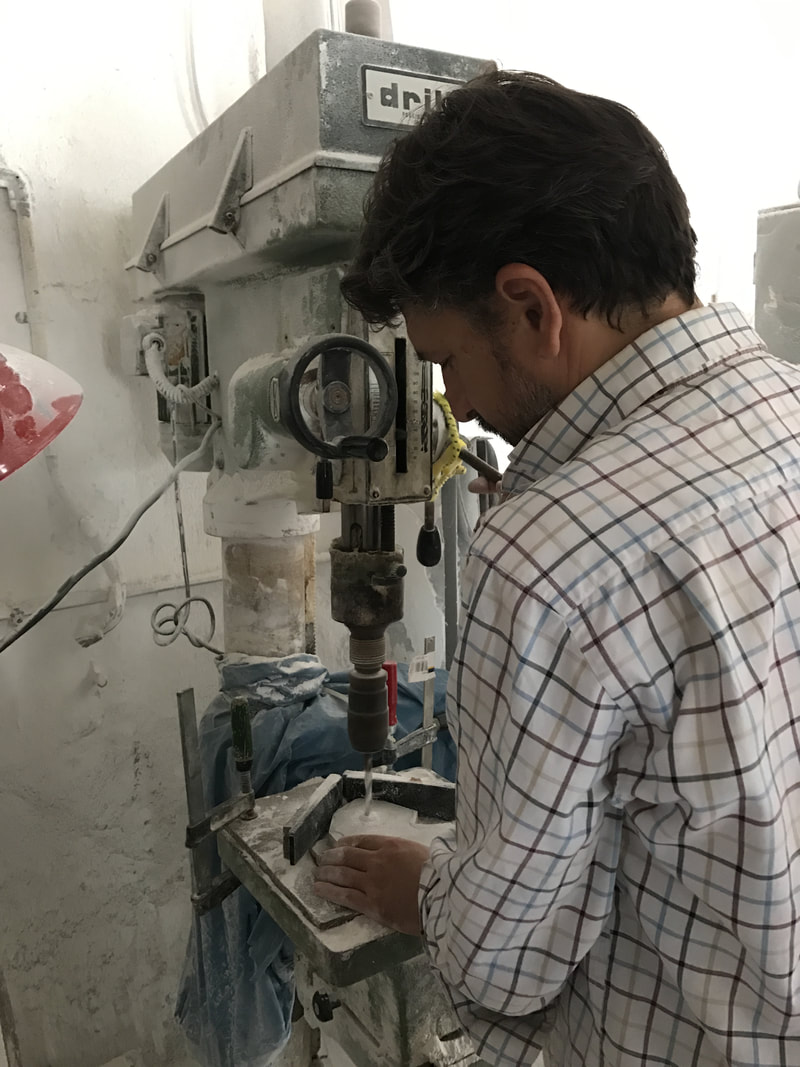
Alabaster is a type of gypsum rock, it's usually white or delicately shaded and translucent. Volterra has a long history of crafting alabaster sculptures since Etruscan era. Some local even called it "oro bianco" (the white gold). I had a great opportunity to visit our guest professor Andrea's family Alabaster workshop and got a little taste of crafting it. 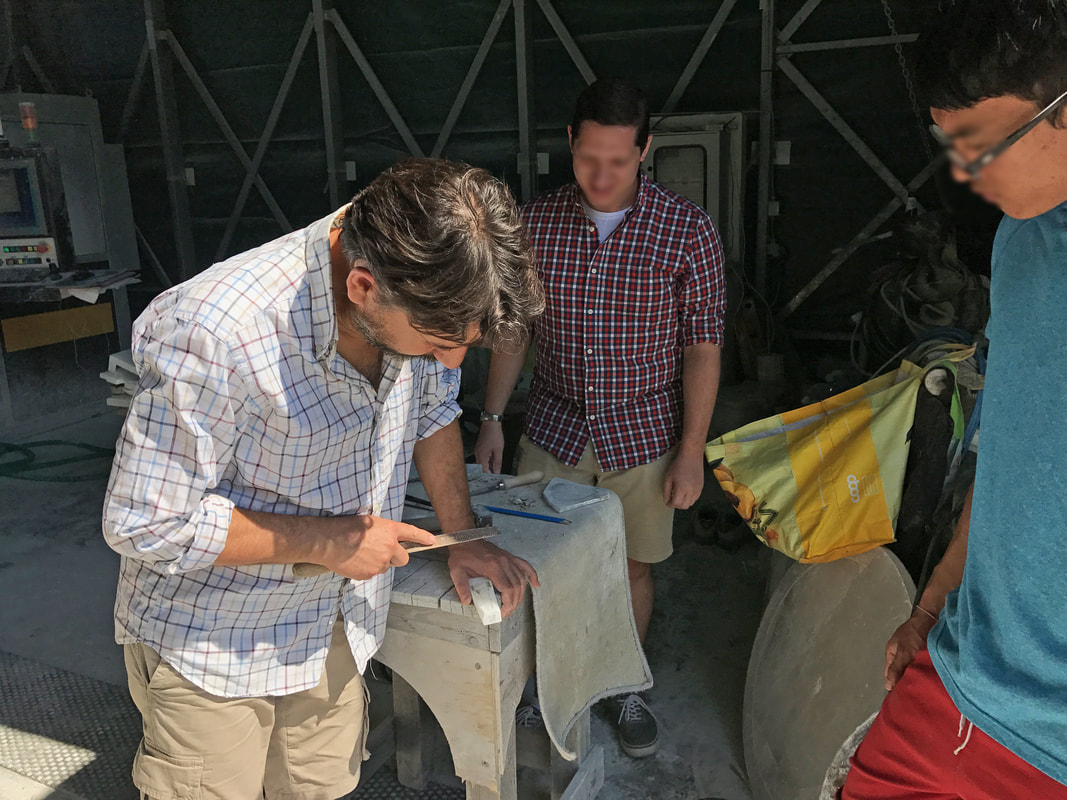
Architect Andrea showing us some basic techniques
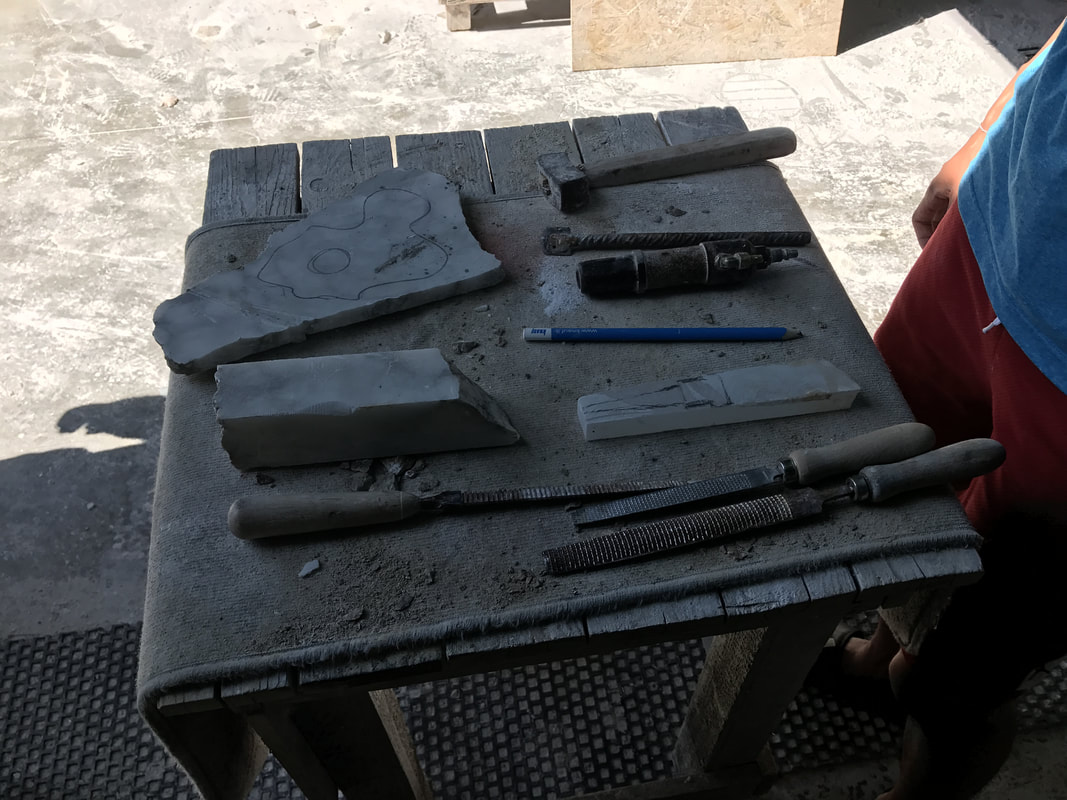
Before
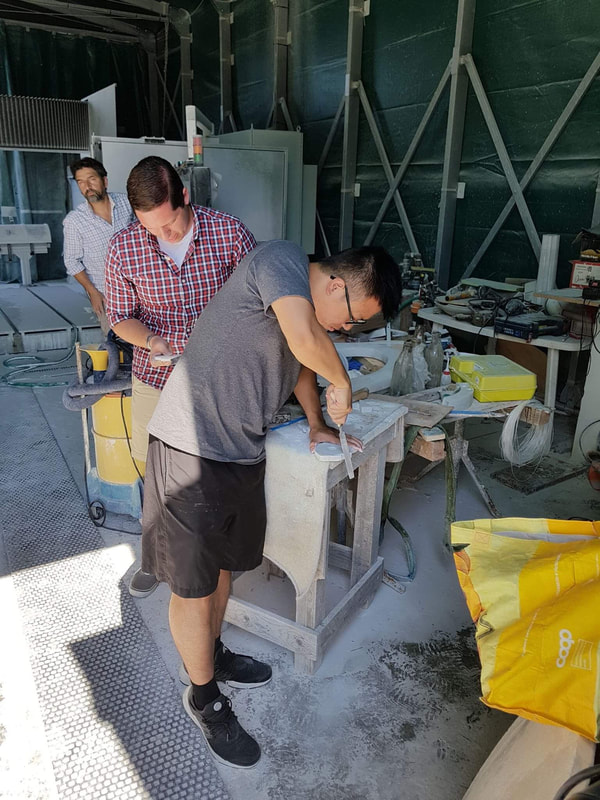
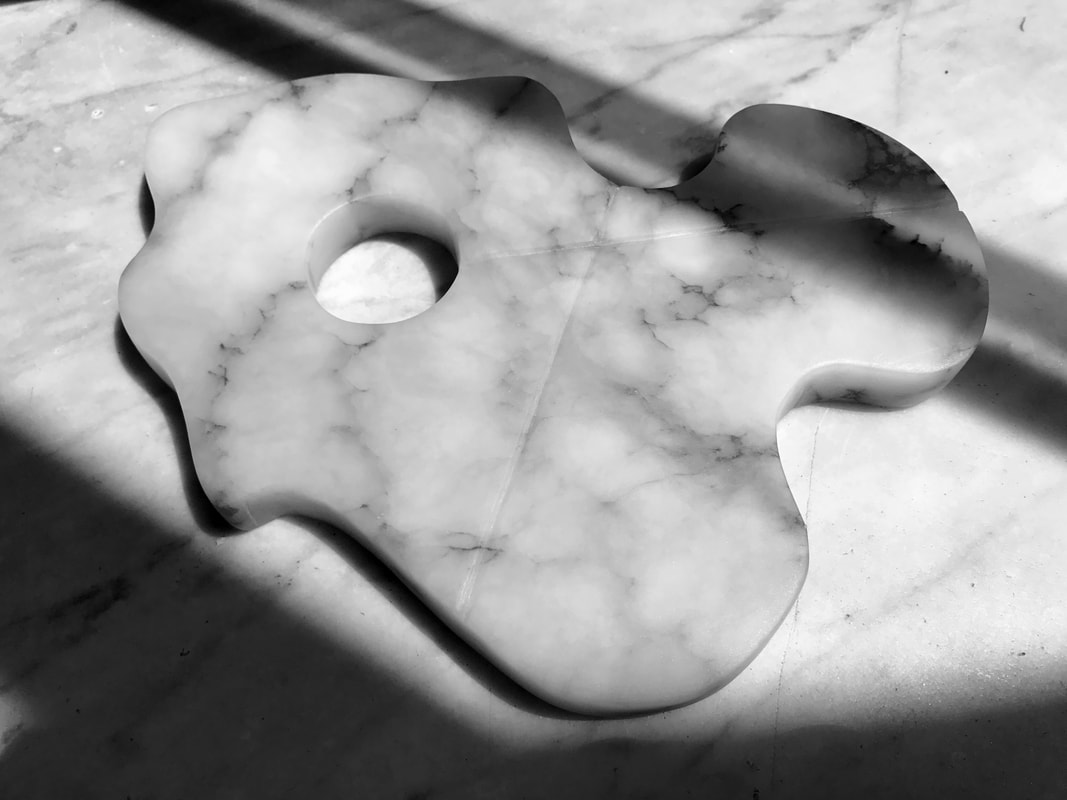
After: alabaster is a very soft stone therefore we used wood-working tools to craft it.
Volterra Workshop Project
Project name: Acropolis Re-imagined Type: Landscape & pavilion Site: Acropolis, Volterra, Italy 
Entrance perspective
The Volterra Acropolis is located on a very open hill and is directly connected to the park. The idea is to establish boundaries to the site to set up thresholds that can improve spatial experience. These boundaries are in different heights depend on the existing landscape fabrics. Fragments of walls are used to frame views and divide the space into smaller zones.
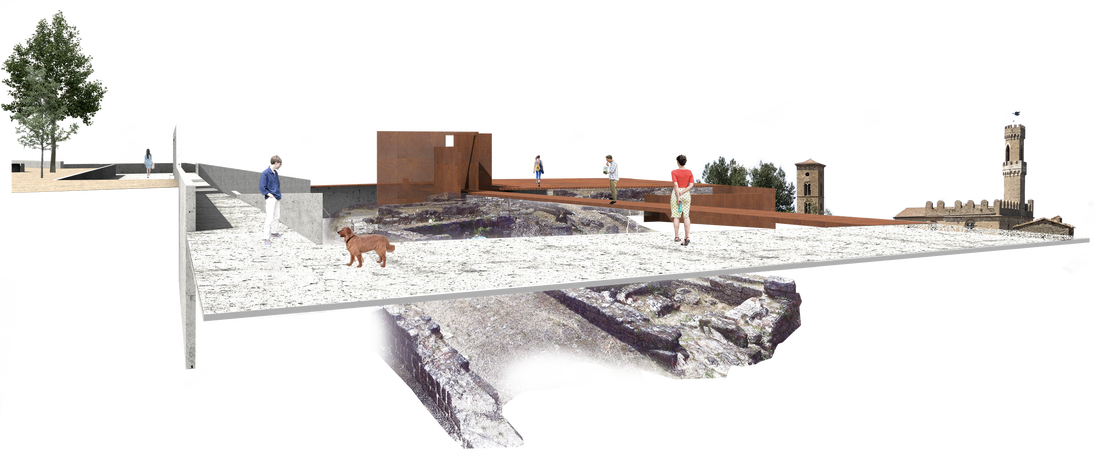
One path is floating above the ruins in between the Etruscan temple and Roman temple to help visitors to orient better. The other one follows small water canal and the existing Acropolis circulation to create a more intimate experience. Both paths eventually end at the Artifact Garden where it will provide more information about the Acropolis and also display some Etruscan or Roman artifacts. The terrace walls near the exit are tapering around the hills and create a direct visual connection back to the park.
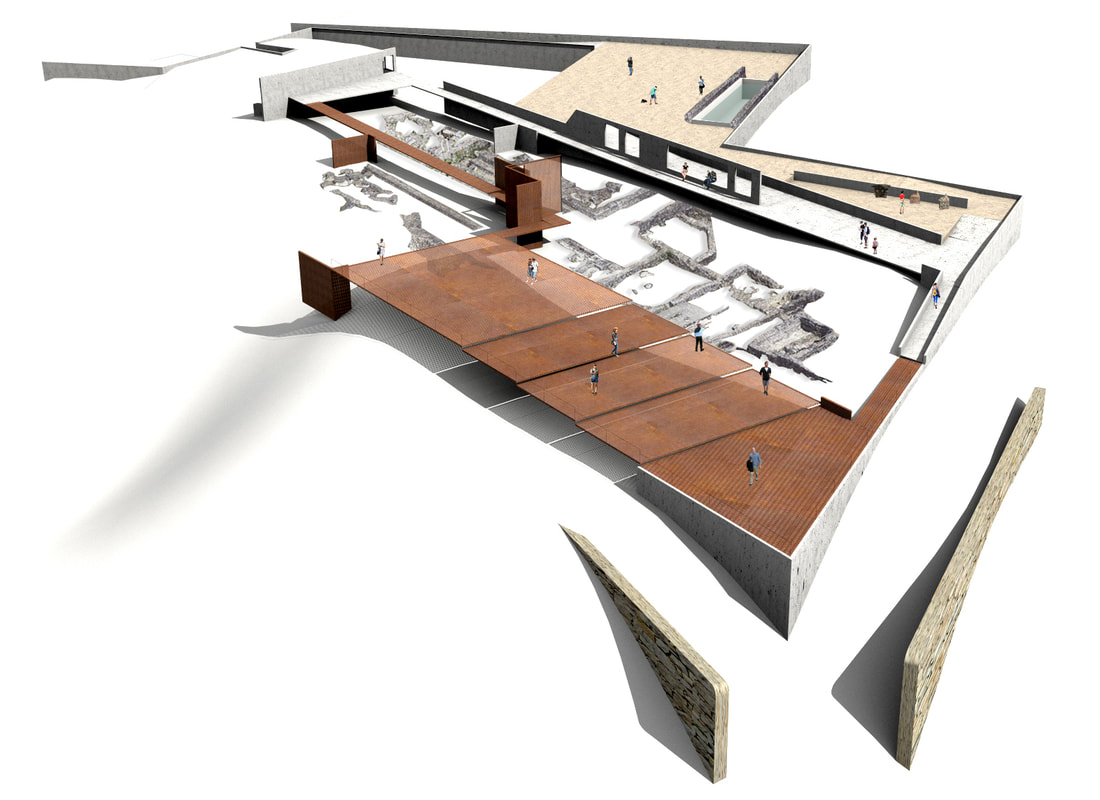
We used a lot of framing techniques to highlight the ruins and also placed certain walls to re-orient people within the site.
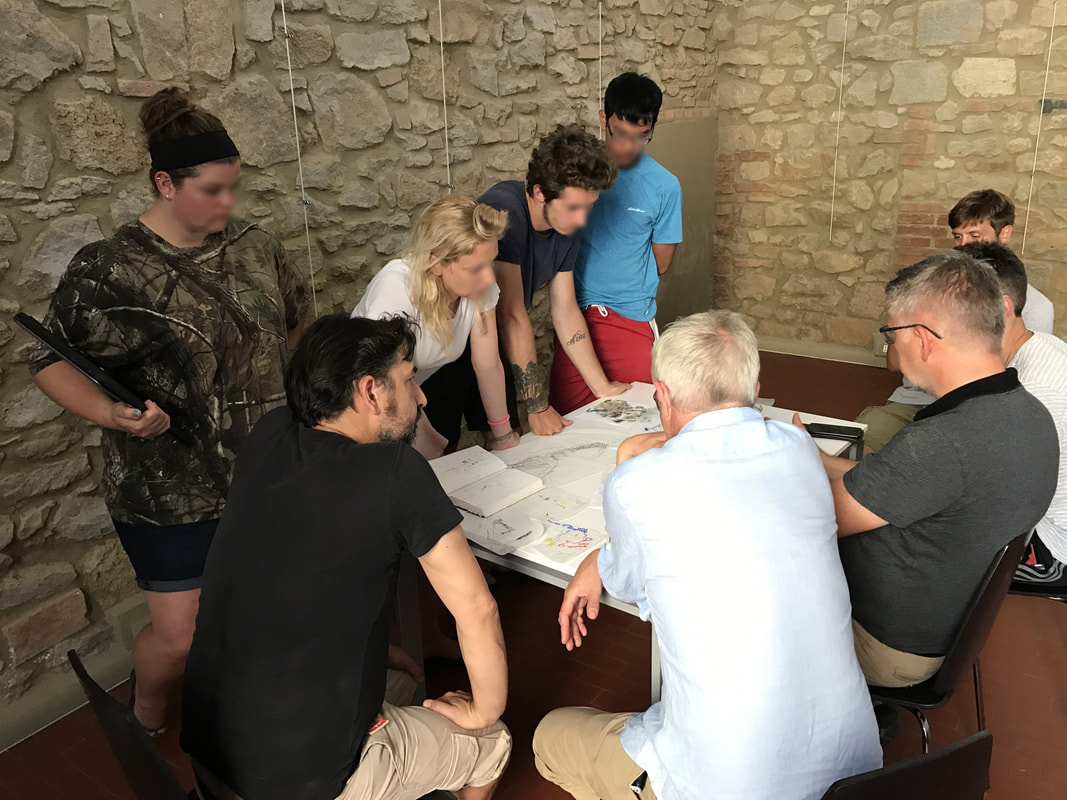
Team desk crit with professors
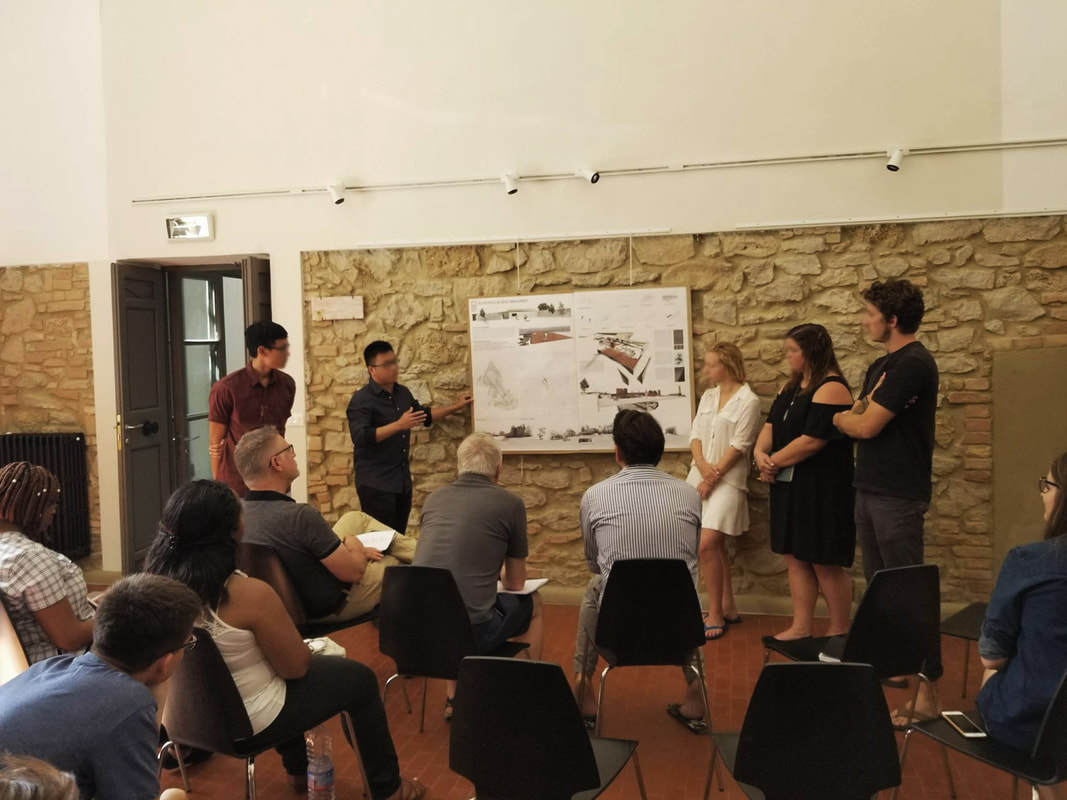
Team 2 Final Review
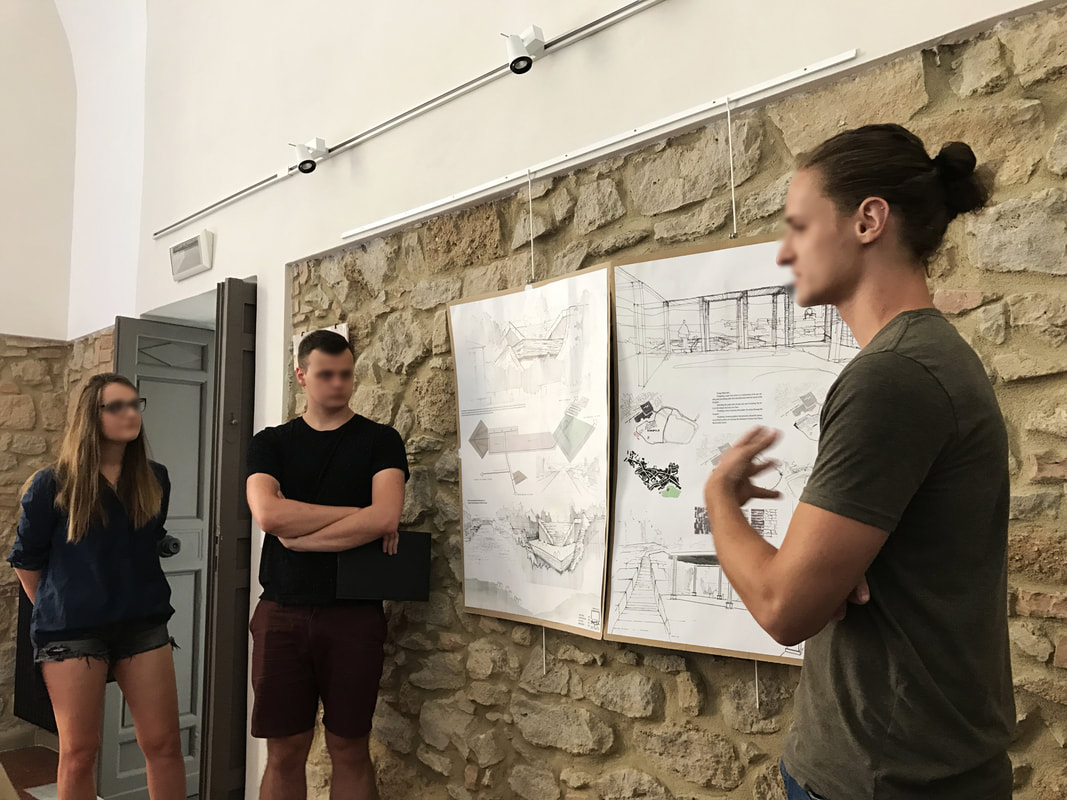
Team 1 Final Reivew
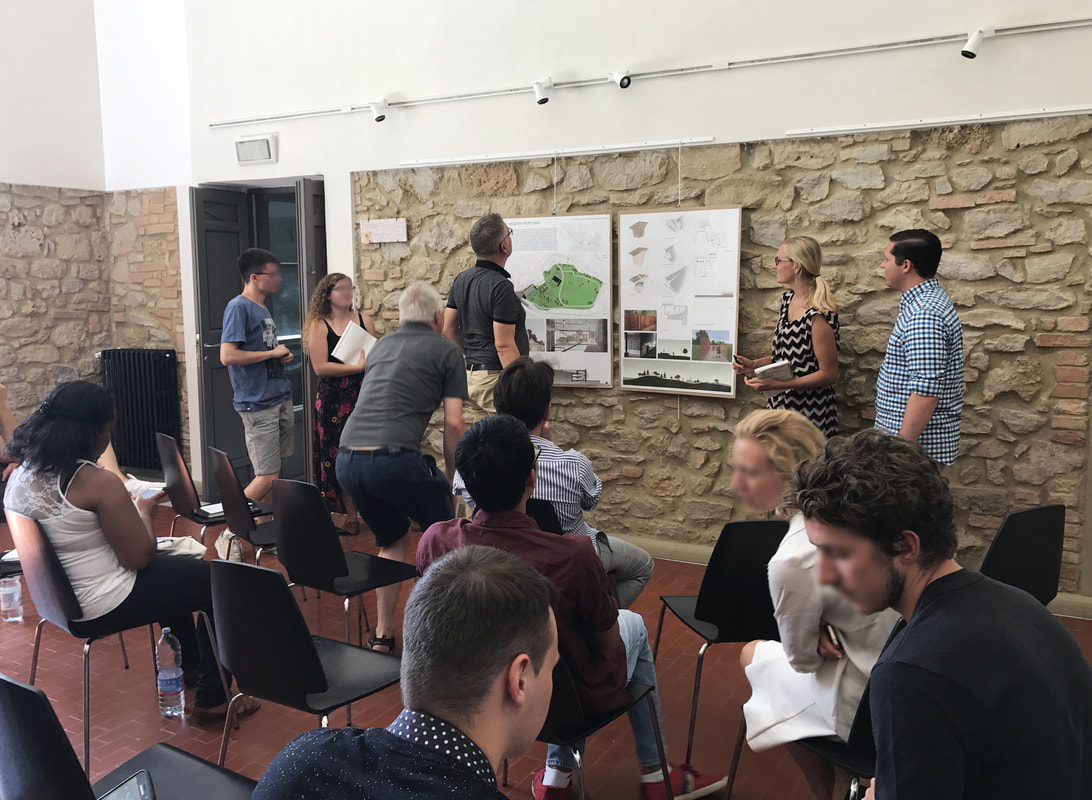
Team 3 Final Reivew
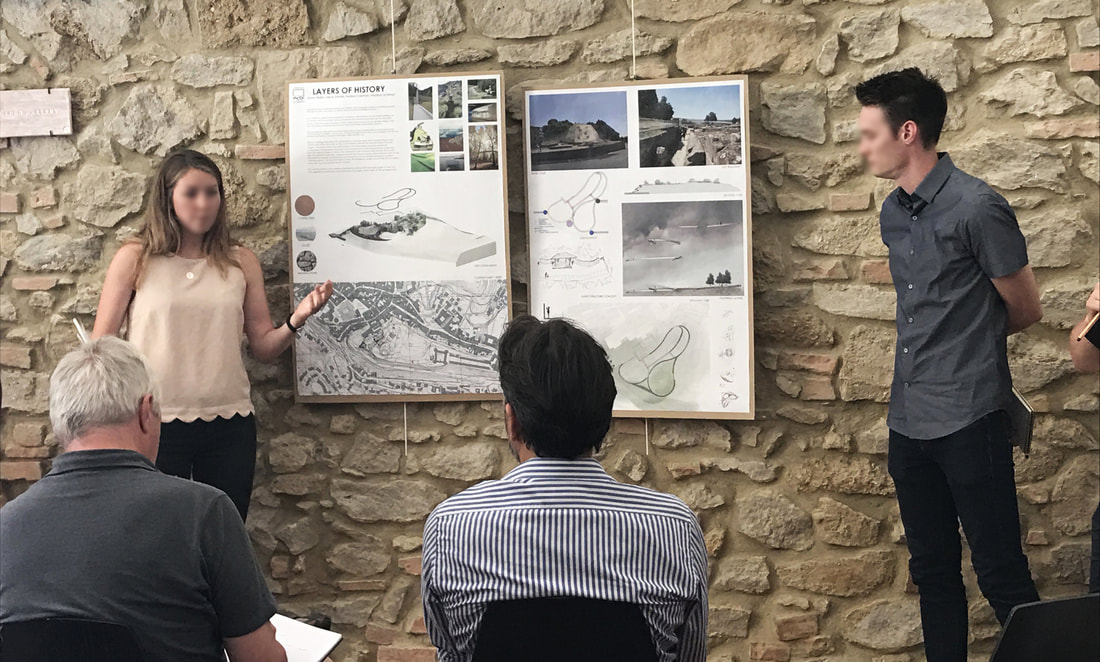
Team 4 Final Reivew
Workshop Reflection:
Although this is another study abroad experience, this time it's quite different than the Barcelona year. The mixed team comp. with other schools and the foreign visiting lecturers are definitely the highlights of the workshop. It's fantastic to learn how architecture is being taught in Poland and how they approach a project. The workshop is well paced and the scope of the project for this year is appropriate and suitable for a 10-day design schedule. The project type is also unique since coming from an U.S architectural education background we don't really get to have an ancient site to discuss. This project sort of serves as a continuation of the summer studio project in terms of dealing with layers of context and the landscape. |
AboutThis blog was launched in August, 2015 during my 8th year of studying abroad in Barcelona, Spain. I decided to start this blog and record some of my thoughts and moments. This blog is also dedicate to Richard Fu, a good friend of mine who is now guarding me from above. He inspired me to get out of the comfort zone and be curious about the world. Amig@'s blogs
Check out my brother Will's blog (in Mandarin) to see what he's up to these days (Design, fashion, food, technology, music, film...etc) Check out Kris' website for some high quality photos around the world Archives
September 2023
|
 RSS Feed